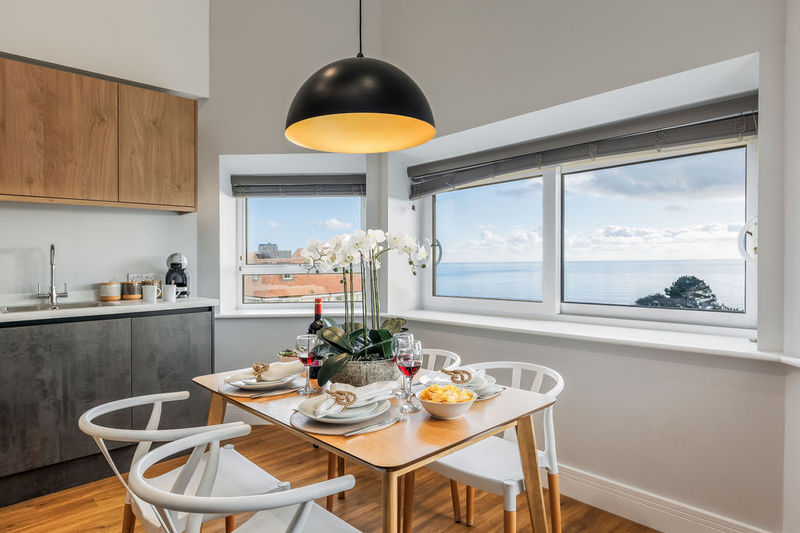
Aparthotel or Hotel for Families: Choose by How Long You Stay
Compare aparthotel vs hotel for family stays in Bournemouth. See how trip length, kitchen access and separate living space shape a more comfortable break.


On this page
For a family, the option with more services isn’t always the easier stay. An aparthotel can make more sense than a hotel when you need room to spread out, prepare familiar meals or keep children’s routines steady.
The right choice depends on more than the room itself. Consider how long you’ll be away and how you want to spend your days. A hotel can suit a short break when you’d rather not plan meals or cook. For a longer stay, an aparthotel’s kitchen, dining space and separate living area can make it easier to settle in together.
This guide explains what sets an aparthotel apart from a hotel, how kitchens and room layouts affect family life, and which option may suit different needs and lengths of stay. If you’re planning a Bournemouth visit, use the comparison to work out what will feel comfortable for your family, from a quick weekend away to a longer seaside break.
Key takeaways
- Choose accommodation around how your family will use the space, not just how many beds it has.
- Consider whether preparing some meals yourselves would make family routines easier during the stay.
- Compare the services included as well as the room arrangement when weighing overall value.
- Interconnecting rooms and kitchenettes can offer a middle ground between a standard hotel room and an apartment-style stay.
- Let the length of your trip guide the decision: the balance between convenience and extra space shifts over time.

What Is the Difference Between a Hotel and an Aparthotel?
A traditional hotel usually centres on a private room, while an aparthotel combines apartment-style accommodation with hotel facilities. For families, the main differences are separate living space, bedroom privacy and how much time you’ll spend in the accommodation.
Family Space and Separate Bedrooms
A family hotel room may put everyone in one shared space, or offer a family room or suite. An aparthotel often has a separate bedroom and lounge, sometimes with a sofa bed for another guest. One- or two-bedroom layouts can give children and adults more space to sleep and spend time apart.
Picture a family with four suitcases and one cot: storage and circulation space matter as much as bed count. A separate lounge also means adults can sit together after children go to bed at 20:30, rather than staying in darkness beside them.

Aparthotel Privacy and Living Areas
Separate rooms can give families more privacy than a single shared hotel room. Children can sleep in a bedroom while parents use the lounge, and a dining area gives everyone a place for breakfast or quiet play. This can feel more like a temporary home, especially when the family needs downtime between outings.
A traditional hotel may still suit families who value a private room and shared facilities, such as a restaurant or reception. Its room layout generally offers less separation, so consider whether more sleeping space or hotel services matter most.
Aparthotels typically have a kitchen, ranging from a compact kitchenette to a full-sized kitchen. Some also have separate bedrooms or an in-unit washing machine, although facilities vary by property. These features can help families prepare simple meals, store food and manage laundry during their stay.
Housekeeping varies too. Hotels typically provide daily room cleaning, while aparthotel cleaning follows the individual stay programme. Linen arrangements also depend on each property’s housekeeping plan. An aparthotel may mean less routine service, but more independence for families.

Aparthotel Drawbacks for Families
Extra living space brings practical trade-offs. Families may need to prepare meals, keep the kitchen tidy and work around the aparthotel’s cleaning schedule. A hotel may be more convenient if daily room cleaning, full catering or services such as room service are priorities.
Shared facilities vary between properties. Some aparthotels have a pool, restaurant or reception, but apartment-style accommodation does not automatically include every hotel amenity. The important thing is to choose a layout and services that suit your family’s routine.
| Accommodation | Bedrooms and living space | Housekeeping | Kitchen |
|---|---|---|---|
| Hotel | Private room, family room or suite | Typically daily room cleaning | Not a defining feature |
| Aparthotel | May have separate bedrooms and lounge | May follow the stay programme | Typically included, from kitchenette to full kitchen |
Weigh the space your family needs against the services you want included.

Kitchen facilities for family meals and dietary needs
A kitchen can make family meal planning more flexible, especially when children have familiar breakfast routines or different food preferences. Preparing a simple meal in your aparthotel can reduce the need to plan every meal around restaurant opening times. This is useful when a child is tired after a day out or needs to eat earlier than the adults.
Kitchen facilities range from a compact kitchenette to a full-sized kitchen. Cooking and dining essentials may include a hob, oven, microwave, fridge-freezer, pans, utensils, plates, glasses and cutlery. The difference matters: a microwave and fridge suit reheating and storing food, while a hob and pans allow more cooking from scratch.
For example, a family staying for several days could keep breakfast items in the fridge and prepare an easy evening meal after a day out. This can help when children have familiar food preferences or adults want control over ingredients. It also lets the family choose when to eat, instead of planning every meal around restaurant times.
- For quick meals: a microwave and fridge-freezer help with reheating and storing food.
- For cooking from scratch: a hob, pans and utensils give more flexibility over meals.
- For eating together: plates, glasses and a dining area make meals easier to organise.
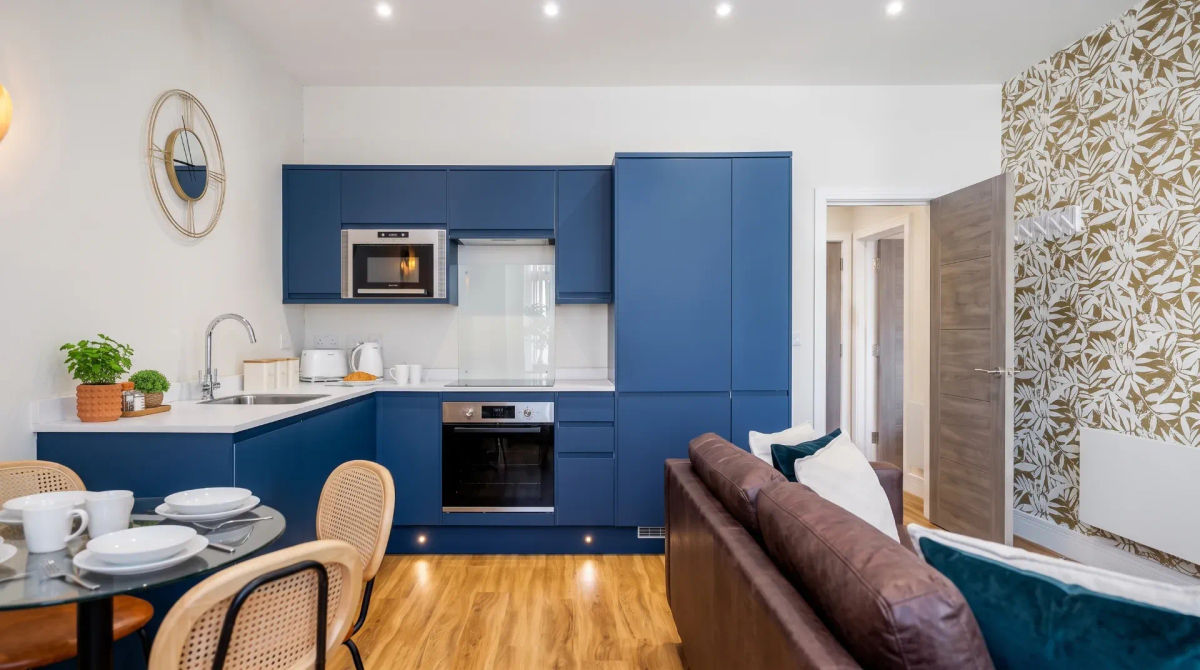
Hotels often focus on shared facilities such as restaurants, bars, room service and leisure spaces. This can suit families who prefer to have meals handled for them, while self-catering suits those who want more control over their routines. Consider what fits your day: a hotel restaurant may simplify dinner after an outing, while a kitchen can make an early breakfast easier.
Location affects how useful these facilities are. Consider nearby food shops, cafés, parks and attractions. A supermarket nearby can make self-catering easier, while cafés and restaurants close to a hotel can take pressure off meal planning. If your family plans beach days, for instance, a food shop on the route back to your accommodation may be handy.
UK aparthotels and hotels may offer family facilities such as cots and extra beds, but arrangements depend on the property. Serviced apartments can provide cots and highchairs. For a family with a baby, these can reduce what parents need to bring. For older children, sleeping arrangements affect how comfortably everyone shares the space.
Cancellation terms and deposits set out the payment schedule and what happens if plans change. Before booking, compare the cancellation deadline, refund conditions, deposit amount and balance due date. These details can matter when plans depend on school holidays, travel arrangements or other people joining the trip.
Practical checklist: choosing for your family profile
With children, good value depends on the services, routines and space your family will actually use. Both hotels and aparthotels can work, but the better fit depends on your children’s ages and how you prefer to spend time away.
Costs, Included Services and Budget
Compare the whole stay, not just the room rate. A hotel package may include meals, daily cleaning or leisure facilities, while a serviced apartment can give you more control over dining and laundry spending. Included breakfast can help with an early start; self-catering can suit families who would otherwise eat every meal in restaurants.
List the services your family would use, such as breakfast, room service, kitchen access or cleaning. Paying for hotel facilities the children won’t use may offer less value than having flexibility over meals and routines.
Value for Families and Groups
For a family or group, compare the accommodation needed with the sleeping arrangements. A larger apartment-style unit may keep everyone together, rather than requiring multiple hotel rooms. Shared space for meals and downtime can be useful, while separate sleeping areas give everyone more privacy.
Children’s ages shape the value too. Families with babies or children under 3 may benefit from separate space for naps and adult routines. Some children aged 4 and over may enjoy hotel features such as buffets, kids’ clubs or evening shows, where those facilities are available.
Longer Stays and Accommodation Costs
Aparthotels can be cheaper for longer family stays, particularly if a kitchen helps reduce restaurant meals and laundry costs. The overall saving depends on what you use and what the accommodation includes, so compare the full cost instead of assuming one type always costs less.
For a longer trip, add expected meals and laundry to your accommodation budget. A family that cooks some meals and does laundry in the apartment may spend differently from one choosing a hotel package with meals and daily cleaning.
Suitability for Babies and Young Children
Neither accommodation type is automatically safer for babies. Suitability depends on the room layout and facilities. An aparthotel can support family routines with a separate living area, and serviced apartments may provide cots and highchairs, reducing what parents need to bring.
Consider the child’s day: a baby who naps whilst adults remain awake may suit separate rooms, while a child who enjoys hotel activities may prefer shared facilities. For children aged 4 or 5, a kids’ club may appeal if one is offered and the child enjoys that kind of activity.
- Prioritise convenience: choose hotel services if meals and daily cleaning matter most.
- Prioritise flexibility: consider an aparthotel if cooking and family routines matter more.
- Match the age: weigh nap space for younger children against activities for older ones.
Hotel interconnecting rooms and kitchenettes
A hotel can offer more flexibility than a single room. Interconnecting rooms provide separate spaces joined by an internal door, while a kitchenette adds some convenience for meal preparation. These features can narrow the gap with apartment-style accommodation, though they don’t provide the same layout or independence.
For a family of four, interconnecting rooms can provide separate sleeping areas without placing the group in unrelated parts of a building. If a family is given two rooms some distance apart, parents and children have less immediate contact. An internal connection is useful at bedtime and during quiet time, while each room remains private.
A hotel kitchenette gives families an option between eating out and using a full apartment kitchen. It can suit simple holiday routines, such as preparing breakfast before heading out or keeping snacks close at hand. An aparthotel’s kitchen and living area generally provide more room for meal preparation and family downtime, while a hotel kitchenette is more compact.
Kitchen equipment determines what that compact space can do. A fridge-freezer and microwave help with storing and reheating food, while a hob, oven, pans and utensils allow a wider range of cooking. Plates, glasses and cutlery matter too, especially when children are eating in the room. Match the equipment to your plans: reheating takes less preparation than cooking dinner from scratch.
- Choose interconnecting rooms when separate bedrooms and the convenience of an internal link matter most.
- Choose a hotel kitchenette when you want hotel accommodation with some flexibility around snacks or simple meals.
- Choose an aparthotel layout when a distinct living space and fuller kitchen access are important for the holiday.
These options balance privacy, cooking and shared facilities differently. Interconnecting rooms keep a family close while separating sleeping spaces, but don’t automatically add a living room. A kitchenette can make a hotel room more practical, depending on the equipment. An aparthotel combines apartment-style space with hotel facilities, which may suit families who expect to spend more time indoors.
When booking, compare the floor plan and listed facilities with your family’s routine. A family needing separate bedtimes may prioritise interconnecting rooms; a family planning regular meals in the accommodation may value kitchen equipment and dining space more. The most convenient arrangement supports how you’ll use each space, from breakfast to bedtime.
Choosing between hotels and aparthotels by stay length
Trip length affects how much value a family gets from hotel services or apartment-style space. For an overnight visit, a traditional hotel can keep arrangements simple. As a holiday stretches towards a fortnight, the accommodation may play a bigger part in daily family life. When weighing an aparthotel against a hotel, start with how much time you expect to spend indoors.
On an overnight stay or weekend break, families often spend most of their time exploring and return mainly to sleep. A hotel can suit this pattern, as there’s less need to organise the accommodation for a longer visit. For a three- or four-day getaway, consider whether hotel services leave more time for outings or whether you plan to relax in the room.
On a longer holiday, an aparthotel’s extra space and independence may be more useful. Over a fortnight or a month, families have more time to settle into a rhythm that works for everyone. Consider whether you’ll regularly use the accommodation as a place to spend time, rather than simply returning to sleep after exploring.
Picture a week with several planned excursions. If the family is out most of the day, hotel services may suit better than facilities you’d use only occasionally. If the itinerary includes quieter days, a separate living area can give children room to play and adults a place to unwind. Match the accommodation to your balance of outings and downtime.
Before booking, sketch out a typical day at the start and later in your stay. Will family members spend time indoors together? Are plans likely to change, and how much flexibility do you want in your routine? A schedule packed with outings points towards convenience; open days may make the extra space of an apartment-style stay more valuable.
Use these stay-length patterns as a starting point, then consider your itinerary and preferred pace:
- Overnight or weekend: choose a hotel if convenience and time out exploring matter most.
- Three or four days: consider whether hotel services leave more holiday time for outings.
- A fortnight or a month: consider an aparthotel if you’ll use its space and flexibility regularly.
These are useful patterns, not fixed rules. A family spending a weekend indoors may value apartment-style accommodation, while one staying longer with a full itinerary may prefer a hotel. Consider how the length of your stay shapes each day, from the first morning to the final evening. Choose the arrangement that suits how your family expects to spend that time.
Flexiestays Bournemouth: Hotels in Bournemouth
Flexiestays Bournemouth offers hotels and aparthotels in Bournemouth for family visits of different lengths. Once you've settled on the accommodation style that suits your plans, the choice comes down to finding a stay that fits your family's needs.
Tower House Apartments Hotel offers luxury seaside apartments, whilst Cliff Heights Apartments Hotel has garden and sea-view apartments. Compare their accommodation styles to find a fit for your family's stay.
Make your Bournemouth stay fit your family
The right choice is the one that lets your family enjoy the trip, rather than adapting every day around the accommodation. Before deciding, picture an ordinary morning and evening during your stay: what would help those moments run smoothly for everyone? This practical test can clarify the aparthotel-versus-hotel decision for your family.
For a Bournemouth visit, Tower House Apartments Hotel, Cliff Heights Apartments Hotel and Cliff Manor Apartments Hotel are options to consider as you weigh up which accommodation suits your plans. If you have questions about dates, family arrangements or priorities, contact Flexiestays.
A little thought about how your family wants to spend its time can make choosing feel simpler. With the right base, you can look forward to a Bournemouth stay shaped around your family.
Frequently asked questions
An aparthotel combines apartment-style living with hotel-style services. The exact arrangement varies, but it commonly gives guests a private place to sleep alongside facilities for preparing food. For a family planning a full day out, this can make it easier to store snacks or manage an early breakfast. Check the property’s facilities and layout, as the name alone doesn’t guarantee a particular setup.
No, facilities differ between properties. Hotels may focus on services such as reception, restaurants or room service, while aparthotels often emphasise independent living and in-room cooking facilities. Some aparthotels also have shared amenities, but these aren’t the same everywhere. If your family wants a swimming pool, check that specific feature rather than assuming it comes with either accommodation type.
An aparthotel pairs private accommodation with apartment-style facilities, which can suit families who want more control over daily routines. Parents might prepare a simple breakfast before an early outing, then return to a space where children can unwind. This independence can be appealing, though families who prefer to have every meal and service arranged may find a traditional hotel more straightforward. The right fit depends on how your family likes to spend time away.
A hotel can be the better choice when you want meals, room service or daily housekeeping handled for you. It may also suit a short visit built around outings, when you expect to spend little time in your room. Families who value a restaurant or leisure facilities may favour a hotel, provided those amenities suit their plans and are available at the property.
An aparthotel often suits a longer stay if your family will use its kitchen and living areas regularly. Over an extended visit, a familiar place to eat breakfast, store food and spend quieter evenings can help establish a comfortable routine. A hotel can still suit you if daily service or catered meals matter more. Consider your itinerary and how much time you’ll spend at the accommodation.
Either can work for a multi-night stay; base your choice on your plans, not the number of nights alone. A family with a packed itinerary may value hotel services and spend little time indoors. If you’ll have relaxed days, need space for children to play or want to prepare some meals, apartment-style facilities may be more useful. Also weigh the housekeeping arrangement against the level of service you prefer.
In the UK, the main distinction is the accommodation style and facilities, not one standard layout shared by every property. A hotel generally offers private guest rooms and hotel services; an aparthotel combines apartment-style accommodation with some hotel facilities. Features vary, so compare what’s actually provided, including cooking facilities, room layout, housekeeping and shared amenities, rather than relying on the label alone.
There isn’t one accommodation type that is always cheaper for a family. The total depends on dates, occupancy, room arrangement and what the rate includes. Compare the full booking cost and likely extras, such as meals out, rather than headline room prices alone. A kitchen may affect dining costs, while hotel services may reduce the need to plan meals separately. Choose based on the overall value for your family.