Benefits of Extended Stay Accommodation: Comfort, Flexibility and Everyday Ease
Discover the practical benefits of extended stay accommodation for 28 nights or more, from fully equipped kitchens to lower monthly rates and real comfort.

On this page
What does an extended stay give you that a short hotel booking may not? Often, it’s the room to settle into a routine. The benefits of extended stay accommodation become clearer when work, relocation or a longer break calls for more than somewhere to sleep.
It’s reasonable to wonder whether a longer stay will feel comfortable, or whether cooking, laundry and work will become a daily hassle. Furnished, self-catering accommodation can make those routines easier with an equipped kitchen, fibre Wi-Fi and a private workspace. For stays of 28 nights or more, monthly rates can bring key costs together, making it easier to compare accommodation with the separate expenses you might otherwise need to plan for.
This guide explains the practical advantages of staying longer, from flexible everyday living to clearer budgeting. It also looks at which features matter for business trips, relocation, family travel and leisure, so you can weigh up your needs before choosing. Whether you’re away for a work assignment or taking a longer break, the right setup can help make each day more manageable.

Key takeaways
- The benefits of extended stay accommodation depend on how well the setup fits your reason for travelling and your day-to-day needs.
- Compare the full package, not just the headline rate, and check which recurring essentials are included.
- Match accommodation features to your plans, whether you’re relocating, working on a project, travelling as a family or taking a longer break.
- A longer booking isn’t automatically better value, so weigh the total arrangement against what you’ll use.
- Before booking, review the stay length, cancellation terms, payment options and support arrangements.
Benefits of extended stay accommodation go beyond a longer booking
A longer booking doesn’t automatically make a stay an extended-stay experience. The difference is whether the accommodation works as a practical base for daily life, rather than simply somewhere to return to at night. Extended-stay accommodation generally means furnished lodging designed for visits beyond a brief overnight trip. The point at which a stay counts as “extended” varies by provider and booking terms, so focus on what the space and arrangement offer you.
As a starting point, What is an extended stay hotel? offers an overview of the format. In practice, the benefits of extended stay accommodation depend on your length of stay, reason for travelling and everyday routines. A furnished space that’s ready to use means you don’t have to source furniture or set up household essentials for a temporary visit. That convenience matters most when you need to settle in quickly, but it won’t be equally valuable to every guest.
What makes an extended stay different from a short break?
On a short break, you might mainly need a comfortable bed, somewhere to wash and a convenient base between outings. Staying longer changes the questions. Where will you prepare breakfast? Can you work without taking over the bed? How will you manage laundry without repeatedly packing and unpacking? The more ordinary days your trip includes, the more these details shape how comfortable and manageable it feels.
There isn’t one universal definition of an extended stay. Booking conditions and minimum lengths vary, so duration alone doesn’t tell you whether a particular arrangement will suit. Look instead at what’s ready to use, what’s included and how much flexibility the booking offers. A furnished apartment can make arrival simpler than a rental that requires you to organise a household. A short hotel booking may be more straightforward when you only need a base for a few nights.
Which travellers may benefit from staying longer?
Different circumstances call for different things. Someone relocating may value a furnished base while getting settled; a remote worker may prioritise a reliable place to concentrate. A business traveller could need a quieter routine between workdays, while a family on a longer leisure trip may appreciate having space to eat and unwind together.
There’s no single ideal extended-stay guest. A project worker might care most about a predictable place to return to after each shift, whereas someone taking a longer break may want the freedom to plan days at their own pace. Consider what your stay actually involves: meals, working hours, downtime, laundry and the possibility that plans may change. Those needs will help you judge whether the format offers genuine convenience.
The useful comparison is not simply “long stay or short stay”. It’s whether a furnished space, flexible booking and included essentials fit your routine better than the alternatives. Next, consider everyday comfort, the full cost of a stay and which features matter for your reason for travelling.
How extended stay accommodation makes everyday routines easier
A useful longer-stay space should work around the things you do between arriving and going out again. An equipped kitchen can make breakfast, packed lunches or a late meal easier to fit around your plans. It gives you more choice about when and where you eat, though cooking facilities don’t automatically mean you’ll spend less. The benefit is control over your routine, not a guaranteed saving.
Why kitchens and living space matter on longer trips
A room designed mainly for sleeping can feel limiting when you’re spending more of the day indoors. Where the layout allows, a separate living area gives you somewhere to sit, eat or unwind without turning the bed into the only place to do everything. For a family, that might mean one person can relax while another prepares a meal. A solo guest may simply value having space to read or plan the next day.
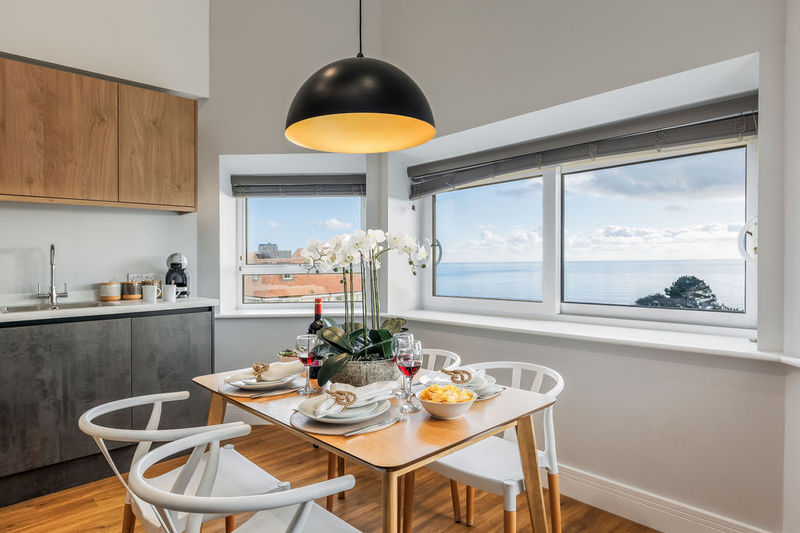
Check the facilities against your routine. If you expect to cook, look for the equipment you’ll need. Flexiestays Bournemouth apartments have kitchens equipped with an induction hob, oven, fridge, dishwasher, washing machine, kettle, toaster, cookware and crockery. If you’ll be away long enough to need fresh clothes, check how laundry is handled and whether cleaning is included in your rate. These details can differ between accommodation and booking types, so don’t assume a service is included without checking the rate details.
Can a serviced apartment support work as well as rest?
For remote work or a business assignment, a private, laptop-friendly workspace and fibre Wi-Fi can make it easier to follow a normal working pattern. A separate living area may also help you put work away at the end of the day. Neither feature guarantees productivity, but both can make the space more adaptable than a room where work, meals and downtime all compete for the same surface.
Prioritise features according to how you’ll use them:
- Regular cooking: look for an equipped kitchen with the appliances and cookware you’ll need.
- Working during the stay: consider Wi-Fi, a suitable workspace and room to take breaks.
- Managing washing: check whether laundry facilities are provided and how cleaning is arranged.
- Time indoors with others: consider whether the layout gives people room to do different things.
Flexiestays Bournemouth apartments include equipped kitchens, fibre Wi-Fi and a private laptop-friendly workspace. Every apartment also has a smart TV with Netflix and Disney Plus pre-installed, and free on-site parking with one bay per bedroom. Think through a typical day, from breakfast and work to an evening winding down, and match the apartment’s facilities to the way you’ll use the space.
Are extended stays better value? Compare the full package, not just the rate
A longer stay isn’t automatically better value. A lower nightly rate may leave you arranging household essentials separately, while a higher-looking rate may cover recurring costs you’d otherwise need to budget for. The benefits of extended stay accommodation are easier to assess when you compare the complete arrangement, including what you’ll use and what you’d still need to organise.
What should an extended-stay rate include?
Check the inclusions line by line. Depending on the property and rate, recurring essentials may include utilities, Wi-Fi, cleaning and parking. Distinguish what’s included in the quoted rate from what’s an optional extra or needs to be arranged separately. A kitchen gives you more choice about meals, but it doesn’t guarantee a particular food budget.
For stays of 28 nights or more, Flexiestays monthly rates include rent, electricity, gas, water, fibre Wi-Fi, council tax, TV licence, gym access, parking and fortnightly cleaning. These rates are typically 30 to 40% below the equivalent nightly rate. A bundled structure can make recurring accommodation costs easier to plan, but its value still depends on your needs. Parking may matter to one guest, while another may place more importance on Wi-Fi or cleaning. Long-term stays don’t require an AST, agency fees or a guarantor.
How to compare accommodation without relying on headline rates
Compare like with like. Use the same dates and length of stay, and account for the number of people, your meal routine and whether you need parking or regular internet access. Then consider the practical setup: furnished accommodation may reduce the need to arrange household items, while a conventional rental may have different furnishing, utility and service arrangements. Don’t treat either category as identical across every property.
Nightly-only accommodation: The quoted rate may cover the room or unit, with other services and facilities varying by property. Check which essentials are included and how the arrangement works over your full stay.
Monthly rate with bundled inclusions: Recurring items may be grouped into one rate, which can make planning simpler. Check precisely which utilities, internet, cleaning or parking are covered, and whether any extras are separate.
Conventional rental: Furnishing, utilities, internet and cleaning arrangements can differ. Factor in setup tasks and household costs, as well as the flexibility offered for your intended stay.
Make a simple comparison before deciding. Write down your stay dates, essential facilities and likely extra arrangements, then review each option against the same list. Include costs you can identify, but also consider the time and effort involved in setting up a temporary home. A bundled monthly rate may suit someone who values clearer recurring arrangements; a nightly booking may make more sense for a shorter visit with fewer day-to-day needs.
Who benefits most from extended stay accommodation?
An extended stay can be useful when travel starts to resemble ordinary life: regular workdays, meals to plan, belongings to unpack and time to spend indoors. The right fit depends less on a traveller’s label than on what their days require. A temporary base may help during a move or work assignment, while a short visit with a packed itinerary may call for little more than somewhere to sleep.
- Relocation: A furnished base can bridge the gap between arriving and finding a longer-term home, helping you keep daily routines going without moving every household item at once.
- Project work: A worker on a fixed-term assignment may value a consistent place to return to between shifts and room to prepare for the next working day.
- Remote work: A suitable workspace can make it easier to separate working hours from time off, particularly if the stay includes regular online meetings.
- Family travel: A layout with separate areas can give family members room for different routines, while a kitchen can help with meals at varied times.
- Longer leisure breaks: A longer booking can suit travellers who want unhurried days and less pressure to organise every part of the trip in advance.
When does an extended stay suit work or relocation?
For a relocation, think about the transition period. You may need a practical place to sleep, work and keep belongings while sorting out the next stage. A furnished apartment can reduce the number of immediate household arrangements to make. Project teams and corporate travellers may also need booking details that are straightforward to share with colleagues or a finance department. The value lies in finding a base that supports the assignment, not in treating accommodation as a substitute for relocation planning.
For a short business visit, a hotel room may be more convenient if you’ll spend most of your time elsewhere and have few day-to-day needs. A conventional rental may suit someone who expects to stay longer and is prepared to organise the household themselves. The practical difference is how much setup, space and routine the trip calls for.
When can longer stays work well for leisure and family travel?
On a longer family trip, having space to eat together and unwind can make days feel less tightly scheduled. A couple taking a slower break might value a comfortable place to return to between plans; a solo traveller may care more about a quiet corner for reading or catching up on work. These are different priorities, so compare the layout with who’s travelling and how you’ll use the space.
Before choosing, consider how often you’ll be in the accommodation and what needs to happen there. If your plans leave little time indoors, a short hotel visit may be enough. If you expect regular work, shared meals or quieter days, a longer stay may better match the shape of your trip. That distinction helps you judge whether the extra space and flexibility will be useful in practice.
How to choose an extended stay that fits your needs
Choosing a longer stay is easier when you work from your own plans rather than an impressive-sounding feature list. Start with the dates you expect to need, then consider how much room you’ll want for work, meals, downtime and belongings. A practical shortlist should make it clear which options fit your routine and which would mean compromises you’d notice every day.
A practical checklist before committing to a longer stay
Use this sequence to compare options on the same basis:
- Set your likely dates. Note your expected arrival and departure, plus any uncertainty that could affect the length of the booking.
- Picture a normal day. Consider work or study hours, meals, time spent indoors and how you’ll manage washing or other household tasks.
- Separate essentials from preferences. Decide what you genuinely need, such as a particular layout or parking, and what would simply be convenient.
- Compare the arrangements. Check each option against your list, including the services and facilities that matter to you.
- Read the booking terms. Understand the cancellation conditions, payment schedule and how to access support during your stay.
This order helps reveal practical mismatches early. For instance, a layout that looks suitable online may not give you the separation you want between working and relaxing. If your dates are uncertain, cancellation terms may matter more than an additional facility. Keep your list beside each option and record what is included, what is optional and what you would need to arrange yourself.
What a serviced apartment can offer for an extended stay
A serviced apartment can provide a furnished base without requiring you to organise a household before settling in. Flexiestays offers different apartment layouts, so consider the space in relation to the number of guests and how you plan to use it. The Tower House apartment layouts and Coast serviced apartment options illustrate how accommodation formats can differ.
Before you reserve, make sure the specific apartment and rate align with your checklist. The details that matter most depend on the stay: a business guest may prioritise a work-friendly arrangement, while someone travelling with family may focus on having enough room to settle in. Review the booking terms alongside the property details rather than relying on a headline description alone.
Once you’ve compared dates, layout, practical needs and terms, you can make a decision with fewer unknowns. Choose the option that supports the way you expect to spend your days, rather than focusing only on the length of the booking or the number of facilities listed.
Make your next stay work around your plans
Before you choose, picture an ordinary day during your stay, not just the moment you arrive. Think about where you’ll start the morning, how you’ll manage work or downtime, and what would make an unexpected change of plans easier. That simple exercise can bring the benefits of extended stay accommodation into sharper focus and help separate genuine essentials from features that merely sound appealing.
Then compare your shortlist against the same needs and booking conditions. A little care now can make the stay feel more straightforward once you’re there, whether you’re away for work, between homes or taking time for a longer break. The right choice is the one that gives your plans room to breathe.
Find your stay and take the next step towards accommodation that fits the way you want to live while you’re away.
Frequently asked questions
On a short break, you might mainly need a comfortable bed, somewhere to wash and a convenient base between outings. Staying longer changes the questions. Where will you prepare breakfast? Can you work without taking over the bed? How will you manage laundry without repeatedly packing and unpacking? The more ordinary days your trip includes, the more these details shape how comfortable and manageable it feels. There isn’t one universal definition of an extended stay.
Booking conditions and minimum lengths vary, so duration alone doesn’t tell you whether a particular arrangement will suit. Look instead at what’s ready to use, what’s included and how much flexibility the booking offers. A furnished apartment can make arrival simpler than a rental that requires you to organise a household. A short hotel booking may be more straightforward when you only need a base for a few nights.
Different circumstances call for different things. Someone relocating may value a furnished base while getting settled; a remote worker may prioritise a reliable place to concentrate. A business traveller could need a quieter routine between workdays, while a family on a longer leisure trip may appreciate having space to eat and unwind together. There’s no single ideal extended-stay guest. A project worker might care most about a predictable place to return to after each shift, whereas someone taking a longer break may want the freedom to plan days at their own pace.
Consider what your stay actually involves: meals, working hours, downtime, laundry and the possibility that plans may change. Those needs will help you judge whether the format offers genuine convenience. The useful comparison is not simply “long stay or short stay”. It’s whether a furnished space, flexible booking and included essentials fit your routine better than the alternatives. Next, consider everyday comfort, the full cost of a stay and which features matter for your reason for travelling. A useful longer-stay space should work around the things you do between arriving and going out again. An equipped kitchen c
For remote work or a business assignment, a private, laptop-friendly workspace and fibre Wi-Fi can make it easier to follow a normal working pattern. A separate living area may also help you put work away at the end of the day. Neither feature guarantees productivity, but both can make the space more adaptable than a room where work, meals and downtime all compete for the same surface. Prioritise features according to how you’ll use them: Flexiestays apartments include equipped kitchens, fibre Wi-Fi and a private laptop-friendly workspace.
Every apartment also has a smart TV with Netflix and Disney Plus pre-installed, and free on-site parking with one bay per bedroom. Think through a typical day, from breakfast and work to an evening winding down, and match the apartment’s facilities to the way you’ll use the space. A longer stay isn’t automatically better value. A lower nightly rate may leave you arranging household essentials separately, while a higher-looking rate may cover recurring costs you’d otherwise need to budget for. The benefits of extended stay accommodation are easier to assess when you compare the complete arrangement, including what you’ll use and what you’d still n
Check the inclusions line by line. Depending on the property and rate, recurring essentials may include utilities, Wi-Fi, cleaning and parking. Distinguish what’s included in the quoted rate from what’s an optional extra or needs to be arranged separately. A kitchen gives you more choice about meals, but it doesn’t guarantee a particular food budget. For stays of 28 nights or more, Flexiestays monthly rates include rent, electricity, gas, water, fibre Wi-Fi, council tax, TV licence, gym access, parking and fortnightly cleaning.
These rates are typically 30 to 40% below the equivalent nightly rate. A bundled structure can make recurring accommodation costs easier to plan, but its value still depends on your needs. Parking may matter to one guest, while another may place more importance on Wi-Fi or cleaning. Long-term stays don’t require an AST, agency fees or a guarantor.
For a relocation, think about the transition period. You may need a practical place to sleep, work and keep belongings while sorting out the next stage. A furnished apartment can reduce the number of immediate household arrangements to make. Project teams and corporate travellers may also need booking details that are straightforward to share with colleagues or a finance department.
The value lies in finding a base that supports the assignment, not in treating accommodation as a substitute for relocation planning. For a short business visit, a hotel room may be more convenient if you’ll spend most of your time elsewhere and have few day-to-day needs. A conventional rental may suit someone who expects to stay longer and is prepared to organise the household themselves. The practical difference is how much setup, space and routine the trip calls for.
On a longer family trip, having space to eat together and unwind can make days feel less tightly scheduled. A couple taking a slower break might value a comfortable place to return to between plans; a solo traveller may care more about a quiet corner for reading or catching up on work. These are different priorities, so compare the layout with who’s travelling and how you’ll use the space. Before choosing, consider how often you’ll be in the accommodation and what needs to happen there. If your plans leave little time indoors, a short hotel visit may be enough.
If you expect regular work, shared meals or quieter days, a longer stay may better match the shape of your trip. That distinction helps you judge whether the extra space and flexibility will be useful in practice. Choosing a longer stay is easier when you work from your own plans rather than an impressive-sounding feature list. Start with the dates you expect to need, then consider how much room you’ll want for work, meals, downtime and belongings. A practical shortlist should make it clear which options fit your routine and which would mean compromises you’d notice every day.
The minimum stay is usually two nights, rising to three nights on peak weekends and holidays. There’s no maximum stay length, so bookings can suit both a brief visit and a longer arrangement. If your dates include a peak period, factor in the longer minimum when planning. The benefits of extended stay accommodation become more relevant when your booking length and daily needs match the facilities provided.
For stays of 28 nights or more, monthly rates include rent, utilities, fibre Wi-Fi, council tax, TV licence, gym access, parking and fortnightly cleaning. Apartments also have equipped kitchens, smart TVs and private workspaces. This can be useful if you’re planning a temporary move or work assignment and want to understand the main accommodation inclusions before settling into a routine. Check the rate details for your booking.
Self-check-in starts from 3 pm, with instructions sent by email three days before arrival. For last-minute bookings, instructions are sent within two hours. Read the email before travelling and keep it accessible for arrival, so you have the information needed to follow the check-in steps. This lets you plan your arrival around the stated check-in time without relying on an in-person check-in process.
Fortnightly cleaning is included in the monthly rate for long-term stays of 28 nights or more. This gives guests a planned cleaning arrangement during a longer booking. If you’re considering a shorter stay or a different rate, check its listed inclusions, as fortnightly cleaning applies to the qualifying monthly long-term rate. Keep the cleaning schedule in mind when planning work, rest or time in the apartment.
Payment can be made in full at booking or split into instalments, depending on the length of the stay. A 25% deposit can secure a booking, with the balance paid later. The payment schedule depends on the booking arrangement, so review the amount due and payment dates shown for your stay before confirming. This helps you plan around the booking commitment.
Under the standard cancellation policy, a full refund is available up to 14 days before check-in, and a 50% refund applies up to seven days before check-in. Cancellations within seven days are non-refundable. A flexible rate allows free cancellation up to 24 hours before check-in and has a higher nightly price. Check which rate you’ve selected and read its terms before booking.