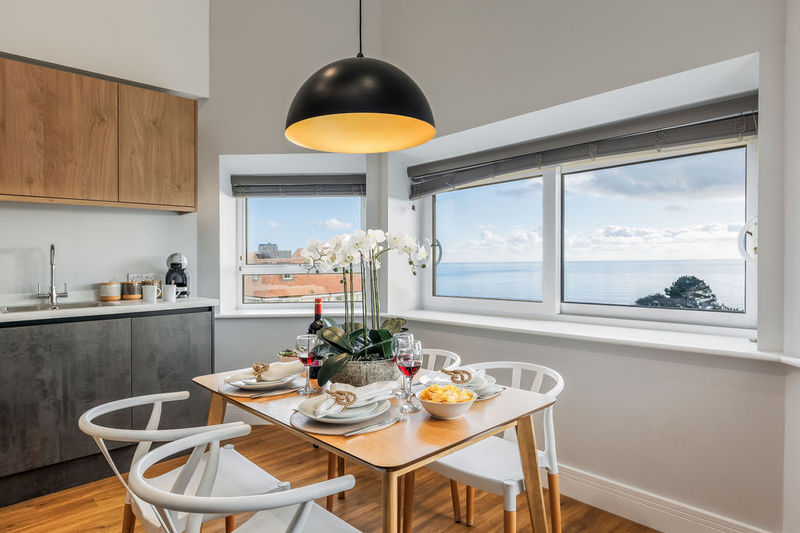
Bournemouth corporate rentals with dedicated workspaces
Compare corporate accommodation Bournemouth options by workspace, Wi-Fi, location and flexible weekly or monthly terms for a practical business stay in town.


On this page
Yes, corporate accommodation in Bournemouth can pair a dedicated workspace with the comfort of an apartment, making it a practical choice for business trips and longer work stays. When comparing options, consider the meeting venue and transport links as well as the workspace.
A place to work is only part of the picture. Compare the amenities that make daily routines easier, from Wi-Fi and a suitable desk to space to unwind after meetings. Knowing where the property is can also help you plan journeys between your accommodation, work and transport connections.
This guide explains what to look for in work-ready accommodation, how weekly and monthly terms can suit different stays, and which practical details to consider before booking. It also compares apartments with other accommodation types, helping business travellers focus on what matters for their trip.
Key takeaways
- Compare apartment layouts and facilities with your work routine, not just the number of bedrooms.
- See what to consider when matching a weekly or monthly stay to your assignment length and travel plans.
- Use a practical checklist to assess workspace, Wi-Fi and accessibility for your day-to-day needs.
- Understand how flats and larger homes differ, then focus your search on the option that suits your group.
- Know which stay details to review, including minimum length and guest limits, before settling on accommodation.
What facilities do your Bournemouth corporate flats offer?
Facilities vary between furnished apartments and private homes within the Flexiestays Bournemouth portfolio, so compare each corporate accommodation Bournemouth listing with your working day. A one-bedroom flat may suit a solo traveller, while a larger home can give colleagues separate bedrooms and shared living space. Bedroom count alone won’t show whether a layout works for a team, so check the stated occupancy and sleeping arrangements too.
Start with the details you’ll use every day. A desk or clear table, a suitable chair, Wi-Fi, good lighting and accessible power sockets can make working more comfortable. Then consider life outside work: a kitchen supports self-catering, while laundry facilities can be useful on an extended assignment. Check each listing rather than assuming every furnished rental includes these features.
- Workspace: look for a desk, chair, lighting and room for work equipment.
- Internet: check that Wi-Fi is described and suits your online tasks.
- Kitchen: review cooking equipment and dining space if you’ll prepare meals.
- Bedrooms: match the room arrangement to your group’s needs.
- Access: consider stairs, entry arrangements and the route from the street.
Serviced apartments and private homes offer different setups for a business trip. An apartment typically combines living and sleeping areas in a self-contained space. A house may provide more separation between bedrooms and shared rooms. The listing type alone doesn’t tell you which facilities are included. Read the property details for furnishings, kitchen equipment, workspace and shared areas before comparing options.
Location affects how useful those facilities are during a work trip. Mark your meeting venue and arrival point, then compare each property’s address with the journeys you’ll make. If you’re travelling by rail, consider the route from the station to your accommodation. If you’re driving, include parking and the distance from the car to the entrance in your comparison.
The total depends on travel dates, booking length, bedroom count, location and included facilities. A price shown for one set of dates won’t necessarily apply to another trip. Compare like with like: use the same dates, guest count and stay length, then weigh workspace and practical amenities alongside the total. This makes the comparison useful for solo travellers and teams alike.
Flexible rolling weekly and monthly terms
A rolling stay can suit a work assignment with a finish date that may change. Compare weekly and monthly terms with your expected schedule, booking arrangements and payment process.
Payment and invoicing arrangements
Payment options affect both booking and expense planning. One available arrangement uses a 25% deposit to secure a booking, with the balance paid later. For a work trip, map each payment to your organisation’s approval and reimbursement steps before you book.
For invoicing, check what information your accounts team needs, such as the guest’s name, stay dates and itemised charges. Keep the booking confirmation and payment records together. This makes it easier to match accommodation costs to the right project or business expense.
Flexible stay durations
Weekly terms can suit a defined assignment, while monthly terms may work better for a longer placement or one with a changing end date. A rolling arrangement lets you plan in shorter periods rather than commit to one fixed departure date. The booking agreement sets out the exact terms.
Before choosing, note your expected arrival, likely finish date and any review point agreed with your manager. Then compare options against those dates. An equipped apartment may make an extended stay more practical, but the booking length should still reflect your work schedule.
Minimum stays and guest limits
Minimum-stay rules set the shortest booking a property accepts. Guest limits determine how many people may stay. These are separate details: a flat may suit a week-long solo assignment but not a travelling team, depending on its stated capacity and sleeping arrangements.
For a group booking, count the travellers and compare the number with the property’s stated guest limit. Check bedroom arrangements against shift patterns or different arrival times too. Keeping names, dates and room requirements clear helps prevent a booking that doesn’t fit the team.
Use this simple sequence to compare weekly or monthly options:
- Write down the expected work dates and likely changes.
- Compare weekly and monthly booking periods against that schedule.
- Match the payment timing to your organisation’s expense process.
- Confirm the minimum stay and guest capacity shown in the terms.
Treat flexibility as something to confirm, not assume. A rolling booking only helps if its notice period, payment schedule and extension process suit the assignment. Read those terms alongside the accommodation details, then share the dates and guest count with the person who approves travel. This gives your team a clearer basis for choosing a stay that can accommodate changes while keeping budget controls in view.
Are there corporate rentals with dedicated workspaces in Bournemouth?
Yes, corporate rentals can include dedicated workspaces, although the setup differs between properties. Compared with a hotel room, an apartment can offer separate living space and kitchen facilities. Compared with a short-term rental, corporate accommodation may suit longer work assignments and business routines.
A desk is useful, but the whole work setup matters. Look for a dedicated surface, a suitable chair, accessible power sockets and lighting that works for video calls. Wi-Fi is also essential for online meetings and file sharing. Read the listing for details about the workspace and connection rather than assuming every furnished property offers the same facilities.
Give accessibility needs equal attention. Look for details about entrance steps, lifts, internal stairs, bathroom layout and the route from the pavement. A photograph may show a doorway without explaining the route through the building. List each traveller’s access requirements, then compare them with the property details before choosing a work base.
Transport planning depends on your arrival point and meeting locations. Map the routes between your accommodation, arrival point and each work address. Rail travellers may prioritise convenient station access, while drivers may focus on parking and the route from the car to the entrance. Consider the whole journey, not just the accommodation’s general area.
Road access also depends on your itinerary and equipment. Use the property address to plan your journey, then consider where you can leave the vehicle during your stay. If you’ll be carrying work materials, assess the route from parking to the entrance. Easy access may matter more than extra living space when equipment needs to move regularly.
Compare these details before booking:
- Connectivity: look for Wi-Fi details and a suitable place for calls.
- Workspace: assess the desk, chair, lighting and power access together.
- Accessibility: consider entrances, stairs, lifts and bathroom arrangements.
- Transport: map the accommodation against arrival points and meeting addresses.
- Driving: assess parking and the route between the property and work.
These checks help distinguish a work-ready base from accommodation that simply has a table. Someone attending meetings may prioritise an easy journey and a quiet place to prepare. A remote worker may value internet access and desk comfort more. Match the facilities to the working day rather than relying on the property category alone.
What corporate accommodation options are available in Bournemouth?
Bournemouth offers several formats for business trips, from hotel rooms to furnished flats and larger houses. The right fit depends on who’s travelling, how long they’ll stay and whether they need shared living space. NHS describes options including one-bedroom flats and two- or three-bedroom family houses, giving solo travellers, colleagues and families different layouts to consider.
A hotel room can suit a short visit built around meetings and time spent away from the property. An aparthotel combines accommodation with apartment-style living, which may be useful if you want more space than a single room. Compare the specific room or apartment details, including sleeping arrangements, workspace and kitchen facilities. The accommodation label alone doesn’t tell you what’s included.
For one person on a work placement, a one-bedroom flat keeps sleeping and living areas within the same home. For colleagues travelling together, a two-bedroom flat can provide separate bedrooms and shared living space. A three-bedroom family house offers another layout to consider when a team needs more rooms. NHS identifies these bedroom options among Bournemouth accommodation.
Private homes and serviced apartments are also worth comparing. A private home may suit travellers who want separate rooms and a domestic layout. A serviced apartment can provide a self-contained base for a business stay. Check the property description for facilities that matter to your routine, such as cooking equipment, laundry arrangements and a dedicated workspace. Don’t infer these details from the listing category.
- Solo trip: compare a hotel room with a one-bedroom flat for layout and work needs.
- Two colleagues: consider separate bedrooms and the shared space in a two-bedroom option.
- Small team: assess whether a three-bedroom house matches the group’s room requirements.
- Extended assignment: weigh apartment-style living against the facilities you’ll use daily.
Location matters as much as layout. For meetings at the Bournemouth International Centre, compare each address with the venue and your planned journeys. A central apartment may make local trips straightforward, while a house outside the centre could suit a car-based schedule. Check each address against your arrival point, meeting locations and daily travel before deciding.
To narrow down the options, first list the number of travellers, bedroom needs and work setup. Then compare the same requirements across hotels, aparthotels, flats and houses. This makes it easier to see whether a compact room or a more self-contained home suits the assignment. In Bournemouth, choose the option whose layout and location support your actual work schedule.
What are the rules for corporate stays, including minimum stay and guest limits
Minimum stays and guest capacity are set out in each property’s booking terms, rather than by one rule for every Bournemouth stay. Read the conditions for the exact dates and accommodation you’re considering. A flat suited to one visiting employee may have different occupancy limits from a house intended for a group.
Find the minimum-night requirement in the listing or booking terms, then compare it with the work schedule, including arrival and departure dates. For example, if a project runs from Monday to Friday, check that the permitted stay covers those dates. A booking that doesn’t meet the stated minimum won’t fit the planned trip.
Guest limits refer to the number of people allowed to stay, not simply the number of bedrooms. Check the stated capacity and sleeping arrangements against the team’s needs. For instance, a two-bedroom property may not suit every group of two if colleagues need separate sleeping arrangements or arrive at different times.
Keep the booking details accurate and consistent. Provide the correct guest count, names where requested and travel dates. If a colleague joins later or the work schedule changes, review the booking terms before making changes. This helps keep the agreed occupancy and stay dates aligned with the team’s plans.
For a company booking, clarify who holds the reservation and who can make changes. The person arranging travel should keep the confirmation, dates and guest details together. For bookings involving several employees, one record helps the travel organiser compare the agreed capacity with the final attendee list.
Use this checklist before confirming a Bournemouth corporate stay:
- Minimum stay: match the required length with the work schedule.
- Guest capacity: compare the listed limit with the full traveller count.
- Sleeping arrangements: make sure the room setup works for each guest.
- Changes: review how date or guest amendments are handled.
- Booking record: save the confirmation and share the key details internally.
These checks matter for solo bookings and team assignments alike. A single employee may only need to match the minimum stay to their meetings. A manager arranging accommodation for colleagues should also confirm that capacity and sleeping arrangements suit the group. Keep the final dates, occupancy and booking terms together so everyone works from the same plan.
For a Bournemouth stay, settle the guest count and trip dates before comparing properties. Then read the relevant terms alongside the accommodation layout. This gives the travel organiser a clear basis for choosing a stay that suits the assignment and its travellers.
Flexiestays Bournemouth: Tower House Apartments Hotel
Flexiestays Bournemouth offers Tower House Apartments Hotel as an apartment-style base for business travellers seeking a self-catering stay. Guests can use self-check-in, fast Wi-Fi and smart TVs, with flexible payment options that include a 25% deposit and the balance paid later. The property may suit a work trip where having apartment facilities matters alongside a place to stay.
For a different Bournemouth location, consider Cliff Heights Apartments Hotel, Cliff Manor Apartments Hotel or Shore Retreat Apartments Hotel. Compare the property details with your meeting location, travel plans and preferred facilities, then choose the option that fits the assignment. To discuss a stay with Flexiestays Bournemouth, contact the team.
Choose a stay that fits the shape of your work
The right corporate accommodation in Bournemouth should fit more than your diary. Consider how you prefer to work, where your meetings take you and what kind of space helps you settle into a routine. These priorities can help narrow the options and guide you towards a practical base for your assignment.
Flexiestays Bournemouth offers Tower House Apartments Hotel, Cliff Heights Apartments Hotel and Cliff Manor Apartments Hotel. Each gives you a starting point for comparing accommodation against your plans. If you’re ready to explore the options for your next business trip, contact Flexiestays Bournemouth to discuss your stay.
A little planning before you travel can make settling in feel straightforward. Choose a setting that works for you and make yourself at home.
Frequently asked questions
An extension depends on the booking terms and whether the extra dates can be added. If a project end date is uncertain, tell your travel organiser which dates are firm and which may change. Keep the booking reference and revised itinerary together so colleagues and accounts staff use the same departure date. Record any change against the original reservation.
There’s no single average for every business booking. The total varies with dates, accommodation type, location, occupancy and stay length. For a useful comparison, gather options for the same dates and traveller count, then compare the total for the full assignment. Include the facilities you need, so a lower headline rate doesn’t obscure an unsuitable setup.
Choose an area by mapping your regular destinations first. If meetings are at the Bournemouth International Centre, compare routes from each potential address at the times you expect to travel. Travellers arriving by train may value a straightforward connection from the station, while those with meetings across town may prioritise their daily route over proximity to one venue.
Serviced apartment options include Tower House Apartments Hotel, Cliff Heights Apartments Hotel and Cliff Manor Apartments Hotel. Compare the location and property details with your team’s schedule and accommodation requirements. For a group, assess whether the room arrangement suits colleagues sharing a booking, rather than relying on the serviced-apartment label alone.
Facilities differ by property, so use each listing to compare what your work routine requires. Someone preparing meals may value a well-equipped kitchen, while a traveller working outside standard office hours may need a private place to take calls. Consider storage, laundry arrangements and space to work on a laptop. Match each practical need with a stated feature.
Terms vary by booking, so read the cancellation conditions and payment schedule before your organisation approves the reservation. Check who can make changes, how the booking is recorded and what documentation accounts staff need. For a project with several travellers, keep everyone’s dates and reservation details clear. This makes expense reconciliation easier and helps prevent confusion if plans change.
Bournemouth Station is a useful point to include in your route planning. Compare rail connections using National Rail travel information, then assess onward journeys to meetings. If your team expects to use local buses, review Morebus routes alongside the accommodation address. Business facilities vary, so assess workspace needs separately from transport access.
Start with the booking dates, number of travellers and work locations each person needs to reach. Then compare the property’s stated occupancy, room layout and relevant facilities with those requirements. For company administration, establish who will hold the reservation and keep the confirmation accessible to the organiser and traveller. A shared record helps prevent mismatched dates, guest details or expense documentation.