Home from Home Accommodation for Work: What to Look For
Choose practical home from home accommodation for work. Compare reliable Wi-Fi, dedicated desk space, full kitchens, and booking terms for 28-night stays.

On this page
Could your work accommodation make a working trip feel less like living out of a suitcase and more like settling into a routine? The right home from home accommodation for work gives you room to focus during the day and switch off afterwards. A bed alone may not be enough, particularly when your stay stretches beyond a few nights.
It is worth checking whether the Wi-Fi can support video calls, whether there is a comfortable place to work and how you will manage meals away from home. This guide offers a practical checklist for comparing those essentials, along with kitchen facilities, privacy and booking flexibility. It is for employees arranging their own stay, remote workers and organisations booking for a team.
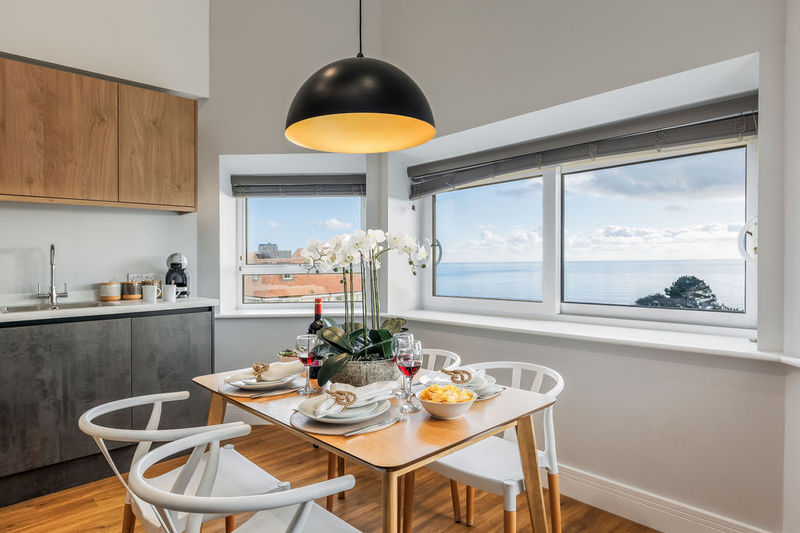
You will also find guidance on extended assignments, including monthly rates for stays of 28 nights or more and corporate booking support. Flexiestays Bournemouth serviced apartments include fibre Wi-Fi, a private laptop-friendly workspace and a fully equipped kitchen. The aim is simple: choose somewhere that supports the whole working day, not just the hours spent asleep.

Key Takeaways
- Use the working, eating, sleeping and practical-task checklist to assess whether a place will support your day beyond working hours.
- Compare an apartment and a hotel room by the space and domestic routines your stay actually requires.
- Choose home from home accommodation for work by matching the facilities and stay terms to your dates and working pattern.
- For a team booking, consider how account management and monthly invoicing could simplify the practical side of an extended assignment.
- Decide whether you need a short stay or a longer arrangement before comparing accommodation options.
What does home from home accommodation for work need to provide?
Home from home accommodation for work is furnished temporary accommodation with everyday comforts and practical facilities for getting your job done. It suits people who need somewhere to stay and work for a defined period, rather than simply a bed between meetings or shifts. Employees on assignment, contractors, remote workers and travelling teams may all need this balance, although their working patterns and length of stay will differ.
Work-ready accommodation is a temporary base with the privacy, facilities and dedicated space to support both working hours and ordinary daily routines. That distinction matters. Somewhere chosen only for an overnight stop may suit a brief visit, but feel restrictive if you need to work there day after day.
Which work stays benefit from a home-like setup?
For a short trip packed with meetings, you might spend little time in your accommodation beyond sleeping and getting ready. An assignment lasting several weeks changes the calculation. You may need space to work between appointments, prepare meals and unwind without relying on the same routine you would follow for one night away.
A kitchen can make a longer stay easier to organise. You can prepare breakfast before an early start or make a simple meal after work, giving you more control over the day. That can be useful for a contractor working away from home, a remote worker keeping regular hours or an employee temporarily relocating while a project or move is under way.
What makes temporary accommodation feel more like home?
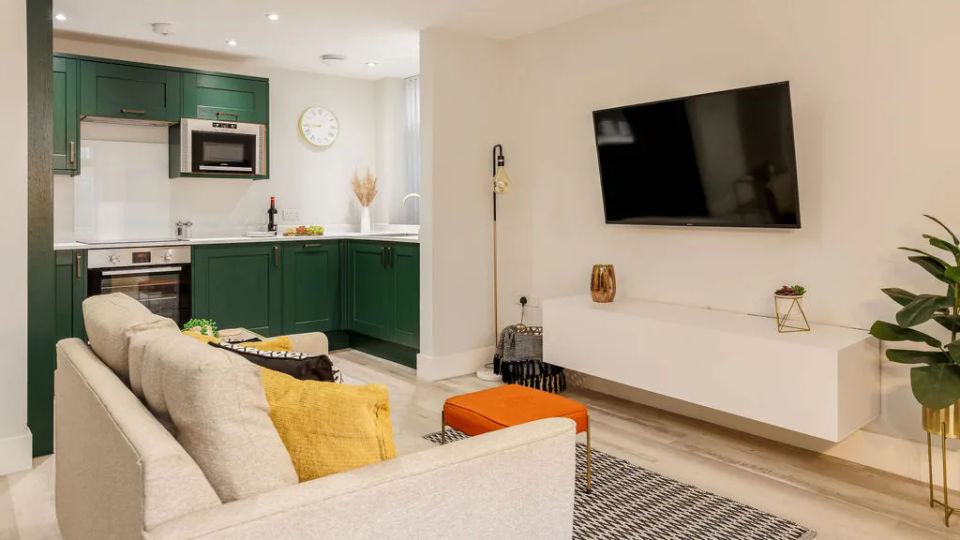
Privacy is part of it, but so is having enough room to settle into a rhythm. A separate place to sleep and relax, storage for belongings and facilities for everyday tasks can make a temporary stay feel less like an extended overnight stop. These details help you unpack, keep to familiar habits and create some separation between work and time off.
A private laptop-friendly workspace gives you a defined spot for the working day, rather than leaving you to use the bed or whichever table happens to be free. It can help keep work materials in one place and make it easier to change gears when you finish. Pair it with reliable internet, and the accommodation is better suited to routine work than a room arranged just for a night’s rest.
Home-like does not mean the same as a residential tenancy. The focus is furnished, temporary accommodation for a work-related stay, with practical facilities ready to use. The right choice gives you a comfortable base for the duration of your assignment while keeping the arrangement centred on a stay, not a permanent home.
Which facilities make a serviced apartment practical for working?
A useful checklist follows the shape of a working day: a place to work, somewhere to prepare food, a comfortable place to sleep and practical amenities for the rest of your routine. The balance depends on the length and purpose of your stay. Someone travelling for a couple of nights may need less than a contractor or remote worker settling in for several weeks.
Choose facilities around your working routine, meals, rest and practical needs. The right checklist depends on the stay. Focus on what you will use regularly, rather than expecting every apartment to meet an identical list of requirements.
How should you assess Wi-Fi and workspace?
Look for fibre Wi-Fi and a private, laptop-friendly workspace as distinct essentials. Internet access supports online meetings, shared files and everyday communication. A dedicated work area gives you somewhere to set up and focus. Check that both are described clearly, rather than assuming a general promise of comfort means the apartment suits your work.
A defined work area can help separate working hours from time off. If you need to take calls or concentrate on detailed tasks, a private spot gives you an alternative to working from the bed or using one table for everything. For employees considering workplace adjustments, the EEOC guidance on reasonable accommodation for work discusses flexible arrangements and alternative worksites. The EEOC is a US agency, so this is background reading, not UK employment guidance.
Why do kitchens and practical amenities matter on work stays?
A fully equipped kitchen lets you fit meals around your schedule. You might prepare breakfast before an early start, make something simple between calls or eat in after a busy day. On a longer booking, a washing machine can help you manage laundry without packing for every possible day. Heating, an iron and a hair dryer also make ordinary routines easier to maintain.
Provided linens mean you can arrive without bringing bedding. A serviced apartment combines self-catering facilities with included services, giving you room to manage daily routines while keeping the arrangement temporary. Tower House Apartments Hotel is one example of this setup.
- Working: fibre Wi-Fi and a private laptop-friendly workspace.
- Eating: kitchen equipment suited to the meals you plan to prepare.
- Sleeping: a comfortable bed and provided linens.
- Practical tasks: consider laundry, heating, an iron and a hair dryer.
Use this as a prompt, not a pass-or-fail test. Your home from home accommodation for work should suit the routine you expect. The accommodation enquiry page provides a way to discuss your requirements.
Serviced apartment or hotel room: which suits a work stay?
Neither format suits every work trip. If you are mainly out at meetings and staying briefly, a room for sleeping and getting ready may be enough. If you expect regular workdays and want to prepare meals, a serviced apartment may fit your routine more comfortably. Compare the practical differences before deciding.
| What to compare | Hotel room | Serviced apartment |
|---|---|---|
| Space | Typically arranged around an overnight stay, with layout and space varying by room. | Apartment-style space for more than sleeping. |
| Kitchen access | May offer limited or no self-catering facilities. | Includes kitchen facilities for preparing meals. |
| Workspace | A room may have a place to work, but the setup varies. | Can provide a private work area alongside living facilities. |
| Length of stay | Can suit a brief visit with few domestic routines. | Can suit longer stays when cooking and working from the accommodation matter. |
When might a hotel room suit a work trip?
A hotel room may be a straightforward choice for a brief visit when your schedule keeps you out for most of the day and you have few meals or tasks to manage in your accommodation. The right choice depends on your plan, not a blanket rule about hotels. A travelling team, contractor and employee on a short assignment may all have different priorities.
When might a serviced apartment be a better fit?
For a stay built around regular workdays, a kitchen can make meals more flexible, while a private work area gives you somewhere to focus away from the bed. These features can be useful when accommodation needs to support both work and time off. Stays of 28 nights or more qualify for monthly rates, with bills and services included.
Employers comparing arrangements can also refer to HMRC guidance on travel and subsistence expenses when considering how work-related travel costs are treated. Cliff Heights Apartments Hotel is another apartment-hotel example to weigh alongside a hotel room.
Home from home accommodation for work is less about choosing a category and more about matching the setup to your days. Consider how often you will work in your accommodation, whether you will prepare meals and how long you will stay. A hotel room may suit a brief visit; a serviced apartment may offer more everyday flexibility for an extended assignment.
How to choose work accommodation for your dates and working routine
Start with the assignment, not the accommodation category. A clear view of dates, working hours and everyday needs makes it easier to compare a short booking with a longer stay and avoid focusing on facilities you will not use.
- Confirm your dates. Note the expected arrival and departure dates, and allow for any likely change to the assignment before settling on a booking length.
- Map out the working routine. Consider how often you will work from the accommodation, whether you will take calls there and how much time you will spend away during the day.
- Match facilities to the work. Compare the workspace and Wi-Fi with your working pattern, then consider whether kitchen and laundry facilities will be useful during the stay.
- Choose the right stay length. Decide whether you need a short stay or accommodation for 28 nights or more. Longer bookings may use monthly rates, so compare the full terms against your expected dates.
- Review what is included. For stays of 28 nights or more, monthly rates include rent, utilities, fibre Wi-Fi, council tax, TV licence, gym, parking and fortnightly cleaning.
- Plan the practical details. Consider parking, arrival arrangements and what support is available during the stay, especially if several people are travelling.
Decision rule: the longer the stay and the more often you will work or manage daily routines in the accommodation, the more useful an apartment-style setup may be. For a brief visit with little time indoors, a simpler room may suit.
What should employees and contractors check before booking?
Match your expected work pattern against the private workspace, Wi-Fi, kitchen and laundry facilities, rather than treating each as a generic extra. Factor in parking if you are travelling by car, and understand the check-in arrangements and available support. Self-check-in starts at 3 pm, with instructions emailed three days before arrival or within two hours for last-minute bookings.
What should employers consider for a team or longer assignment?
For a team, consider whether multi-apartment block bookings and corporate account support will make arrangements easier to manage. Corporate accounts include dedicated account management, VAT-compliant monthly invoicing and PO reference handling. Negotiated rates are available for stays over six months. Corporate enquiries have a 30-minute response SLA during business hours, useful when planning an assignment with several moving parts.
For home from home accommodation for work, the dates set the framework and the daily routine determines which facilities matter. Whether you are arranging an individual stay or accommodation for a team, the work accommodation enquiry page is available for sharing dates and requirements.
Make a work stay feel settled with flexible serviced accommodation
A work-ready stay should fit the whole routine, not just working hours. A private workspace and fibre Wi-Fi support work from the apartment, while a kitchen makes it easier to handle meals on your own schedule. Just as important, the booking terms should suit the length of the assignment, rather than leaving you to make a short-stay arrangement work for months.
Serviced apartments bring these facilities together with 24/7 local support. Stays of 28 nights or more qualify for all-inclusive monthly rates, offering individuals and organisations a practical option for longer work placements.
What does a longer serviced apartment stay include?
Monthly rates apply from 28 nights, with no maximum stay length. They include costs and services that can otherwise make an extended booking harder to plan around:
- Rent and utilities
- Fibre Wi-Fi
- Council tax and TV licence
- Gym and parking
- Fortnightly cleaning
For long-term stays, no AST, agency fees or guarantor are required. Having these details set out as part of the monthly arrangement can make it simpler to plan an assignment and understand what is included. You can then focus your comparison on whether the apartment’s workspace, kitchen and other facilities match the way you will live and work during the stay.
How can a company arrange accommodation for work?
For an employer, accommodation planning involves more than finding somewhere for each traveller to sleep. A corporate account can provide dedicated account management and monthly VAT-compliant invoicing, with PO reference handling to support internal booking and finance processes. For teams travelling together, multi-apartment block bookings offer a way to organise accommodation as part of the same work assignment.
That combination can be useful when a project involves multiple travellers or an extended placement. Teams can plan around their work dates, while the organisation has account support and invoicing arrangements designed for corporate stays. Monthly rates apply from 28 nights; for assignments lasting more than six months, negotiated rates are available.
Before choosing, bring the decision back to the everyday essentials: a private place to work, fibre Wi-Fi, kitchen facilities and stay terms that fit the dates. The right balance helps make home from home accommodation for work feel more settled, whether you are arranging a single placement or coordinating accommodation for colleagues.
If you are organising a team booking or corporate stay, speak to corporate accounts about your requirements.
Plan the stay around the assignment ahead
Turn the assignment into a clear accommodation brief before making a decision. Set out the expected dates, who is travelling, whether the stay is individual or team-based, and how the working week is likely to look. Note any practical requirements that could affect the choice, such as arrival timing or travel by car. A concise brief gives colleagues and decision-makers the same starting point and helps keep the booking aligned with the work rather than treating accommodation as an afterthought.
That preparation is especially helpful when plans may change. Keep the expected end date distinct from any confirmed extension, and make sure the person arranging the stay knows who can approve changes. These steps can make choosing home from home accommodation for work feel more considered, whether you are travelling alone or coordinating for colleagues.
For a corporate or team stay, discuss your accommodation requirements with the corporate accounts team. Having the assignment details to hand helps you move forward with a clearer plan.
Frequently asked questions
For a short trip packed with meetings, you might spend little time in your accommodation beyond sleeping and getting ready. An assignment lasting several weeks changes the calculation. You may need space to work between appointments, prepare meals and unwind without relying on the same routine you would follow for one night away.
A kitchen can make a longer stay easier to organise. You can prepare breakfast before an early start or make a simple meal after work, giving you more control over the day. That can be useful for a contractor working away from home, a remote worker keeping regular hours or an employee temporarily relocating while a project or move is under way.
Privacy is part of it, but so is having enough room to settle into a rhythm. A separate place to sleep and relax, storage for belongings and facilities for everyday tasks can make a temporary stay feel less like an extended overnight stop. These details help you unpack, keep to familiar habits and create some separation between work and time off. A private laptop-friendly workspace gives you a defined spot for the working day, rather than leaving you to use the bed or whichever table happens to be free. It can help keep work materials in one place and make it easier to change gears when you finish.
Pair it with reliable internet, and the accommodation is better suited to routine work than a room arranged just for a night’s rest. Home-like does not mean the same as a residential tenancy. The focus is furnished, temporary accommodation for a work-related stay, with practical facilities ready to use. The right choice gives you a comfortable base for the duration of your assignment while keeping the arrangement centred on a stay, not a permanent home. A useful checklist follows the shape of a working day: a place to work, somewhere to prepare food, a comfortable place to sleep and prac
Look for fibre Wi-Fi and a private, laptop-friendly workspace as distinct essentials. Internet access supports online meetings, shared files and everyday communication. A dedicated work area gives you somewhere to set up and focus. Check that both are described clearly, rather than assuming a general promise of comfort means the apartment suits your work. A defined work area can help separate working hours from time off.
If you need to take calls or concentrate on detailed tasks, a private spot gives you an alternative to working from the bed or using one table for everything. For employees considering workplace adjustments, the EEOC guidance on reasonable accommodation for work discusses flexible arrangements and alternative worksites. The EEOC is a US agency, so this is background reading, not UK employment guidance.
A fully equipped kitchen lets you fit meals around your schedule. You might prepare breakfast before an early start, make something simple between calls or eat in after a busy day. On a longer booking, a washing machine can help you manage laundry without packing for every possible day. Heating, an iron and a hair dryer also make ordinary routines easier to maintain. Provided linens mean you can arrive without bringing bedding. A serviced apartment combines self-catering facilities with included services, giving you room to manage daily routines while keeping the arrangement temporary.
Tower House Apartments Hotel is one example of this setup. Use this as a prompt, not a pass-or-fail test. Your home from home accommodation for work should suit the routine you expect. The accommodation enquiry page provides a way to discuss your requirements. Neither format suits every work trip. If you are mainly out at meetings and staying briefly, a room for sleeping and getting ready may be enough. If you expect regular workdays and want to prepare meals, a serviced apartment may fit your routine more comfortably. Compare the practical differences before deciding.
A hotel room may be a straightforward choice for a brief visit when your schedule keeps you out for most of the day and you have few meals or tasks to manage in your accommodation. The right choice depends on your plan, not a blanket rule about hotels. A travelling team, contractor and employee on a short assignment may all have different priorities.
For a stay built around regular workdays, a kitchen can make meals more flexible, while a private work area gives you somewhere to focus away from the bed. These features can be useful when accommodation needs to support both work and time off. Stays of 28 nights or more qualify for monthly rates, with bills and services included. Employers comparing arrangements can also refer to HMRC guidance on travel and subsistence expenses when considering how work-related travel costs are treated. Cliff Heights Apartments Hotel is another apartment-hotel example to weigh alongside a hotel room.
Home from home accommodation for work is less about choosing a category and more about matching the setup to your days. Consider how often you will work in your accommodation, whether you will prepare meals and how long you will stay. A hotel room may suit a brief visit; a serviced apartment may offer more everyday flexibility for an extended assignment. Start with the assignment, not the accommodation category. A clear view of dates, working hours and everyday needs makes it easier to compare a short booking with a longer stay and avoid focusing on facilities you will not use. Decision rule: the long
Match your expected work pattern against the private workspace, Wi-Fi, kitchen and laundry facilities, rather than treating each as a generic extra. Factor in parking if you are travelling by car, and understand the check-in arrangements and available support. Self-check-in starts at 3 pm, with instructions emailed three days before arrival or within two hours for last-minute bookings.
For a team, consider whether multi-apartment block bookings and corporate account support will make arrangements easier to manage. Corporate accounts include dedicated account management, VAT-compliant monthly invoicing and PO reference handling. Negotiated rates are available for stays over six months. Corporate enquiries have a 30-minute response SLA during business hours, useful when planning an assignment with several moving parts. For home from home accommodation for work, the dates set the framework and the daily routine determines which facilities matter.
Whether you are arranging an individual stay or accommodation for a team, the work accommodation enquiry page is available for sharing dates and requirements. A work-ready stay should fit the whole routine, not just working hours. A private workspace and fibre Wi-Fi support work from the apartment, while a kitchen makes it easier to handle meals on your own schedule. Just as important, the booking terms should suit the length of the assignment, rather than leaving you to make a short-stay arrangement work for months. Serviced apartments bring these facilities together with 24/7 local support. Stays of 28 nights or more qual
Monthly rates apply from 28 nights, with no maximum stay length. They include costs and services that can otherwise make an extended booking harder to plan around: For long-term stays, no AST, agency fees or guarantor are required. Having these details set out as part of the monthly arrangement can make it simpler to plan an assignment and understand what is included. You can then focus your comparison on whether the apartment’s workspace, kitchen and other facilities match the way you will live and work during the stay.
For an employer, accommodation planning involves more than finding somewhere for each traveller to sleep. A corporate account can provide dedicated account management and monthly VAT-compliant invoicing, with PO reference handling to support internal booking and finance processes. For teams travelling together, multi-apartment block bookings offer a way to organise accommodation as part of the same work assignment. That combination can be useful when a project involves multiple travellers or an extended placement. Teams can plan around their work dates, while the organisation has account support and invoicing arrangements designed for corporate stays.
Monthly rates apply from 28 nights; for assignments lasting more than six months, negotiated rates are available. Before choosing, bring the decision back to the everyday essentials: a private place to work, fibre Wi-Fi, kitchen facilities and stay terms that fit the dates. The right balance helps make home from home accommodation for work feel more settled, whether you are arranging a single placement or coordinating accommodation for colleagues. If you are organising a team booking or corporate stay, speak to corporate accounts abou
Yes. Monthly rates apply from 28 nights, with no maximum stay length. The all-inclusive rate covers rent, utilities, fibre Wi-Fi, council tax, TV licence, gym access, parking and fortnightly cleaning. This can make budgeting for an extended assignment more straightforward, as these items are included in the monthly rate rather than arranged separately. Compare the rate with your expected dates when planning a longer work stay.
Corporate bookings can use monthly VAT-compliant invoicing and PO reference handling, which may help an organisation process accommodation costs. Dedicated account management is also available for corporate accounts. Your employer’s own approval and payment arrangements are separate, so agree those internally before making plans. If you are arranging accommodation for a team, keeping booking dates and purchase order details together can help with administration.