Aparthotel for Business: Practical Space for Work and Rest
An aparthotel for business travel gives room to work and unwind, with kitchen and laundry facilities to simplify meals and daily routines in Bournemouth.

On this page
A work trip can feel more manageable when dinner doesn’t depend on finding a restaurant after a full day of meetings. For longer stays, an aparthotel for business travel can bring a kitchen, laundry facilities and separate living space together, giving you room to work and settle into a daily routine.
Practical details can make a real difference on a work trip: preparing a meal, washing clothes between meetings and returning to a comfortable space at the end of the day. Self-catering gives you more control over meals, while a convenient location and useful transport links can simplify getting around.
This guide is for business travellers planning anything from a short work trip to an extended stay. It explains how aparthotels can support work and rest, what to look for in laundry and living facilities, how kitchens can give you more control over meals, and why location matters when you’re travelling for work in the UK.
Key takeaways
- Choose accommodation with separate living space to create a clearer boundary between work and downtime.
- Consider how laundry facilities could simplify packing and day-to-day routines on a longer trip.
- Look for kitchen facilities if you want more flexibility over meal times and what you eat.
- Assess transport links against your meeting locations and planned journeys around Bournemouth.
- Use self-catering to shape your meal routine and manage dining costs during your stay.
1. Business Travel: What Are the Benefits of Staying in an Aparthotel?
An aparthotel combines apartment-style living with selected hotel features, such as a front desk. For a business trip, that can mean a separate bedroom and living area rather than working, eating and sleeping in one hotel room. The arrangement gives you a practical base between meetings, with space to pause without leaving your accommodation.
The difference is especially useful when work continues after the office closes. You can review notes at a table, take a call away from the bed, then use the bedroom for proper rest. A Business Travel Show survey found that 61% of business travellers prefer serviced apartments to hotels for privacy and comfort on long stays.
Length of stay helps determine whether the extra space is worthwhile. Hotels are often suited to business trips of 1–4 nights, while furnished apartments are equipped for stays of 5 or more nights. For a longer assignment, a separate living area can make the routine feel less like an extended hotel visit.
Imagine a week of meetings away from home. Each evening, you return to a bedroom, living space and kitchen, rather than one room serving every purpose. That separation can support a steadier routine, with somewhere to work privately if your schedule changes or you need quiet preparation before a presentation.
Which UK aparthotel chains offer corporate rates and business travel accounts? Corporate rates and accounts are arranged by individual operators, not through one universal UK scheme. Terms can vary by property, location and booking pattern, so a company’s travel team usually handles negotiated arrangements for repeat stays.
Are aparthotel stays eligible for UK business expense claims and VAT recovery? There is no blanket answer: expense treatment and VAT recovery depend on the business purpose, VAT status and supporting records. Keep the accommodation invoice with the travel record so the business’s accountant can assess the claim.
Hotel-style assistance is another consideration, but serviced apartments do not all provide the same level of service. Some do not offer a 24/7 front desk or 24/7 hotel services. If late arrivals or on-site assistance matter for your itinerary, make those needs part of the accommodation decision.
For an extended business stay, assess the setup against your working pattern. A bedroom separates you from the day’s work, while a living area gives you room to read, plan or take a break. Kitchen and laundry facilities can support a more independent routine, as the following sections explain.
An aparthotel for business travel suits trips where privacy, comfort and room to settle in matter as much as a place to sleep. For a brief overnight visit, a standard hotel room may be enough. For a longer assignment, apartment-style space can make workdays and evenings easier to organise.
2. Laundry facilities
A work trip can quickly fill a suitcase with shirts, trousers and gym kit. Laundry facilities in a serviced apartment can simplify longer stays, especially when meetings call for fresh clothes throughout the week. Rather than packing for every day, you can plan to wash clothes during a quieter part of your stay.
The practical value depends on the facilities. An in-apartment washing machine lets you fit laundry around calls and evening plans; shared facilities mean leaving your living space to do it. Either arrangement can help, but consider how much time laundry will take and where it fits into your working day.
For example, after a client meeting, you could separate workwear from everyday clothes and plan a wash before the next day’s appointments. Keeping laundry in your routine can also make packing for the return journey easier. It is a useful consideration when a short assignment turns into an extended stay.
Housekeeping is a separate consideration. Some furnished apartments provide regular housekeeping during longer stays, but this does not necessarily include laundry. Check what the accommodation includes so you know whether washing clothes remains your responsibility.
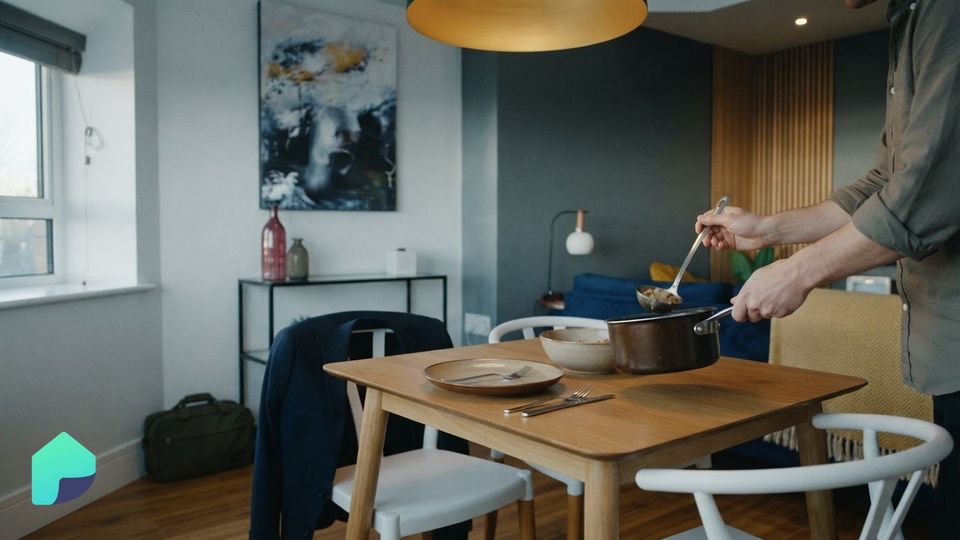
Kitchen facilities add flexibility to your routine. If you have an early start, you can prepare breakfast in the apartment instead of fitting your morning around restaurant opening hours. After an evening meeting, making a simple meal at home may be more convenient than going out. The kitchen’s usefulness depends on its equipment and space.
These facilities can work well together. You can prepare a meal while clothes are being washed, then spend the evening reviewing notes or resting. In a hotel room without distinct living spaces, those activities compete for the same area. An apartment layout can give cooking, laundry and downtime clearer places in your routine.
For a flexible stay, consider the rhythm of your booking, not just its length. A day of back-to-back meetings may leave little time for errands, while a quieter evening may suit laundry or meal preparation. Serviced apartments let you plan these routines when the relevant facilities are available, without requiring every evening to follow the same pattern.
Before your first working day, decide when laundry fits and which kitchen facilities suit your usual meals. A breakfast routine and a midweek clothing wash, for example, may mean you need to pack less. These small decisions can make an extended work stay more manageable. Next, consider the living and kitchen spaces in more detail.
3. Fully equipped kitchens and living spaces
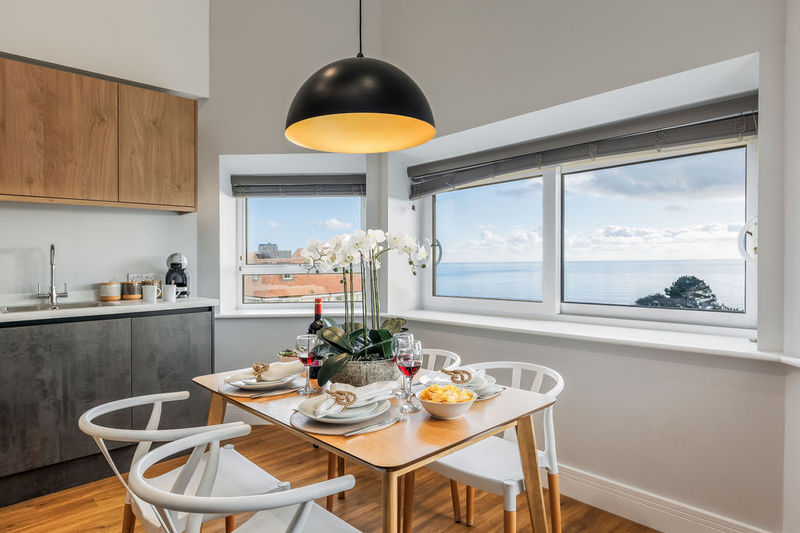
A business stay can call for more than somewhere to sleep. A practical apartment layout gives different activities their own places: a table for reviewing documents, a kitchen for preparing food and a bedroom for rest. After a remote presentation, for example, you can close your laptop and leave your work area instead of spending the evening beside it.
That separation matters when a trip runs across several working days. A living area can become a temporary workspace for checking a presentation or making a call, while a sofa offers a change of posture after desk work. A Savills survey found that 80% of business travellers value space when choosing accommodation.
Kitchen facilities add choice to the daily routine. The Global Serviced Apartments Industry Report found that 76% of travellers preferred having kitchen facilities. A guest with an early appointment can prepare breakfast before leaving; someone returning late can make a simple meal without relying on restaurant opening hours.
“Fully equipped” matters most when it matches how you eat. If you mainly prepare breakfast, a kettle, toaster and space for simple food preparation may be enough. If you plan regular evening meals, cooking equipment and cookware matter more. Choose accommodation with a kitchen that suits your routine rather than assuming every kitchen works for every traveller.
Living and dining areas can support different kinds of work. A table offers a clear surface for a laptop, meeting notes or printed documents. A separate seat gives you somewhere to read a brief without working from the bed. For calls involving sensitive material, separating work from sleeping or shared areas can help create a more private setting.
For colleagues travelling together, a shared living area gives you room to discuss the next day’s schedule without gathering around one bed. Separate bedrooms, where the layout includes them, give each person a more private place to rest. You can review an agenda together, then step away when the discussion ends.
Match the work setup to the tasks you expect to do. A presentation may require a table, a chair and access to power; a short email session may not. Wi-Fi supports online meetings and shared files, but the room layout also affects whether you can work comfortably during a longer call.
For an extended stay, consider how the spaces work throughout the day, not just on arrival. Distinct places for work, dining and rest can help you establish a routine that adapts to your schedule. Choose a layout that suits your working habits rather than a list of facilities you may not use.
4. Access to business hubs and transport links
For a business trip, the right location is the one that suits your appointments. Start with the office, client site or conference venue, then map the accommodation against each address. This helps you compare walking, rail and bus options. A central postcode alone does not show how straightforward the whole journey will be.
Rail connections can shape plans across the UK. Use National Rail journey information to plan journeys to and from the station serving your destination. For the final stretch, check which bus routes connect the station, accommodation and meeting venues. If the schedule includes several stops, account for the connection between each one.
Convenience depends on the whole journey. A short walk may suit a nearby meeting, while rail may matter more for a client visit farther away. Plan for arrival, daily appointments and the return journey. This is more useful than choosing a base solely by postcode or proximity to one office.
Plan your routes before travelling. List each appointment, identify nearby transport options and group meetings by area where practical. Scheduling two nearby client visits on the same day, for instance, may avoid crossing a city between them. Allow time to travel from the station to your accommodation, especially if you are carrying presentation materials.
Bus routes can be useful for journeys that are awkward on foot or involve several parts of a town. Check the operator’s route and timetable against your meeting times. For journeys in Dorset, Morebus route information can help with local planning. The right choice depends on the address, departure point and time of day.
Work-friendly amenities matter between journeys. A quiet place for a laptop, Wi-Fi for a video call and a suitable surface for reviewing documents can make spare time productive. If you arrive before an appointment, you may need to join a call; after a late return, you may want to finish notes indoors.
Internet access supports more than video calls. Online calendars, shared files and travel updates all rely on a connection during your stay. The setup you need depends on your work: sending emails is different from presenting documents in a video meeting. Consider Wi-Fi alongside transport links when comparing accommodation.
Location shapes the pace of a working day. Accommodation near a business district can simplify repeated journeys, while a base near a transport hub may suit appointments across a wider area. Compare your meeting addresses with available routes instead of assuming the busiest centre is automatically the most convenient.
If your business schedule changes, more than one workable route can help. Rail, bus and walking may each suit different appointments or arrival times. Consider the journey home as well as the outward trip. A useful base supports your itinerary rather than relying on one transport option for every journey.
5. Self-catering and meal costs
Meals can take up a substantial part of a work trip’s daily spending, particularly when you buy breakfast, lunch and dinner while travelling. Self-catering gives employees a choice about which meals to prepare and when to eat out. A quick breakfast in the apartment, for example, may be easier before an early client meeting.
How much does an aparthotel for business travel cost per night in the UK? There is no single nightly rate. Prices depend on location, dates, length of stay, accommodation type and facilities. Compare the total cost for your dates and requirements when assessing options.
For corporate travel, compare the full stay rather than accommodation alone. Meal routines affect overall spending: a team with evening client dinners will use a kitchen differently from an employee travelling solo between appointments. Planning around the diary helps you decide whether self-catering is genuinely convenient, rather than assuming it always reduces costs.
For an extended stay, that distinction becomes more useful. A guest working away for several weeks may prefer a mix of prepared meals and local dining, while someone on a tightly scheduled visit may eat out more often. A fully equipped kitchen lets employees vary their routine according to meeting times, dietary preferences and energy levels after work.
Plan around the meals that are easiest to fit in. Breakfast can be prepared before an early start; a packed lunch may suit a day between appointments; dinner can stay flexible if a client meeting runs late. This helps travellers decide what food to buy and when, without requiring every evening to follow the same plan.
Eating out still has a place in a business trip. A meal with colleagues can be part of the working day, and a nearby restaurant may suit a late finish. FlexiePerks members receive discounts at 100+ partner restaurants, bars, cafés and other local venues, which can add value on occasions when you choose to dine out.
Meal flexibility can matter to employees with particular dietary preferences. Preparing a familiar breakfast or choosing ingredients personally can make an extended stay easier to plan. For group bookings, different routines may suit different people, so self-catering gives each employee more choice around their schedule.
The practical takeaway is to plan meals alongside meetings. Identify which days leave time to prepare food, when a client dinner is likely and when convenience matters most. Self-catering is one option within a wider routine, giving travellers more control over meals during a work stay.
The next step is to make the stay fit the work, rather than forcing your workday into a standard room. Choosing an aparthotel for business travel can make sense when you need a base for more than an overnight stop. Consider the length of the assignment, where your meetings are and how you want to spend time outside work.
For business stays in Bournemouth, Flexiestays Bournemouth offers Tower House Apartments Hotel, Cliff Heights Apartments Hotel and Cliff Manor Apartments Hotel. Each gives you a distinct accommodation option to consider as you plan a work visit. The right fit starts with the details that matter most to your trip, from the location you need to the kind of stay you have in mind.
A little planning before booking can make the move from travel arrangements to work feel more settled. Find out more about arranging a business stay in Bournemouth if you need help choosing an option that suits your trip.
Frequently asked questions
An aparthotel can suit a business trip with irregular hours or several working days in one place. Private accommodation gives you a base for preparing before an appointment and unwinding afterwards, without making every task part of a public hotel routine. It can be useful when your schedule changes from day to day and you want more control over your evenings.
An aparthotel for business travel can make a work assignment feel less repetitive by giving you space for focused tasks and time off. After a full day at a client site, for example, you can return to your own space rather than spend the evening in a shared lobby. That distinction can matter on a trip with several consecutive working days.
Prioritise fast Wi-Fi, a comfortable surface for laptop work, suitable seating and accessible power sockets. These basics support everyday tasks such as joining a video call or reviewing a presentation. A meeting room is a separate requirement: accommodation workspaces may suit individual calls, but confidential discussions with colleagues or clients need an appropriate space for everyone attending.
“Aparthotel” and “serviced apartment” can mean similar things, so the label alone does not tell you what a stay includes. For a longer assignment, compare the layout, facilities and support with your routine. A conventional hotel may suit a trip centred on brief visits and hotel services; apartment-style accommodation may work better if you value independence between workdays.
Consider how you enter the property, how private calls can be taken, and what assistance is available outside standard reception hours. These details matter if you arrive late, handle sensitive work or need help during an unexpected disruption. An aparthotel may not provide the same staffed reception or daily hotel service as every traditional hotel, so match its arrangements to your travel needs.