Serviced apartments with high-speed Wi-Fi for business travel
Choose serviced apartments with high speed wifi for business travel. Learn how to assess connectivity, workspaces and living space for a comfortable, settled...


On this page
What are serviced apartments, and can they work for a business trip? They’re furnished places for short or longer stays, with Wi-Fi as an important everyday amenity. Serviced apartments with high-speed Wi-Fi can offer a practical base for work as well as a place to relax. A Wi-Fi label alone, however, doesn’t explain how the connection will suit video calls or other work tasks.
For a business stay, connectivity matters, but so do a comfortable place to work, room to unwind and facilities that make everyday living easier. Choosing accommodation around those needs can help a work trip feel less like an extended hotel stay and more like a settled routine.
This guide explains what serviced apartments typically offer and how to assess Wi-Fi information, work-friendly features and living space when choosing a stay. It’s for business travellers planning anything from a brief visit to a longer assignment, and anyone who wants accommodation to support both working hours and time off.
Key takeaways
- Look beyond a Wi-Fi label: the way access is provided can matter for both short visits and longer stays.
- Read listing details and guest reviews for useful clues about connectivity and whether the space suits focused work.
- Consider how a separate place to work, relax and sleep could support your routine during a business trip.
- Match the apartment’s facilities and layout to the length and needs of your stay, rather than choosing on connectivity alone.
- Explore serviced apartments in Bournemouth, including options with Wi-Fi and smart TVs, as a flexible alternative for work travel.
What are serviced apartments?
Serviced apartments are furnished places for short or long stays, with a private base and facilities suited to everyday living. A serviced apartment with high-speed Wi-Fi can also support remote work, although the label alone doesn’t tell you how the connection performs. Internet access may use a shared guest network, a sign-in portal or a private key for the apartment.
Access can vary with the length and purpose of a stay. For leisure guests staying 1-3 nights, a captive portal is one access model. For stays of 4-6 nights, guests with a streaming stick may use portal access plus a private key requested at reception. Corporate relocation guests staying 1-6 months may have a private key per apartment. For stays of 7+ nights, a private Wi-Fi key per apartment is another model. These approaches shape how guests join the network, not its speed.
How do serviced apartment Wi-Fi speeds compare with hotels and short-term rentals? There’s no universal ranking: performance depends on the property’s broadband connection, network setup and demand. The type of accommodation alone can’t tell you whether a video call will run smoothly.
What evidence should a serviced apartment provide for its advertised internet speed? A clear listing can state the advertised download and upload speeds and explain whether they’re measured results or a broadband package figure. A dated speed-test result, with the test location and connection type, offers useful context, though it can’t guarantee the same result in every apartment.
What should serviced apartments disclose about Wi-Fi before booking for remote work? Look for access steps, whether the network is shared or private, and any limits on connecting work devices. Details about Wi-Fi alongside check-in arrangements can help you plan a working day. A serviced apartment listing with Wi-Fi and parking is one example of how connectivity can appear among practical property details.
Facilities matter beyond broadband. Self-check-in can make arrival straightforward, while a smart TV offers an option for downtime after work. Guest reviews add useful context: comments about connection consistency, sign-in instructions or interrupted calls are more informative than a general rating. Read recent, specific experiences alongside the listing, and consider whether the amenities suit your stay. A stylish finish may appeal, but a clear work surface and dependable access can matter more during a remote-working visit.
How serviced apartments demonstrate Wi-Fi availability
A listing can state that Wi-Fi is available, but that confirms access, not performance. For a business traveller, the distinction matters: internet access may support email while struggling with a video meeting. Look for details about signal coverage, how guests connect and whether the listing describes speed. “Wi-Fi in the apartment” is more useful than a general amenities icon because it indicates that the advertised service applies to the living space.
Specific wording helps set expectations. A listing might say “free Wi-Fi”, “wireless internet throughout the apartment” or “private network access”. These phrases describe availability or access, not a guaranteed connection speed. A clear property description should distinguish a shared guest network from a private connection and explain any sign-in step. For example, a captive portal means guests connect and complete a sign-in page before browsing.
Speed claims need context. A number without a measurement method can be hard to interpret, especially if it refers to the broadband package rather than a test inside the apartment. More useful evidence includes a dated speed-test result, the room where it was measured and whether the test used Wi-Fi or a wired connection. These details help you understand what the claim represents, without treating one test as a promise of identical performance throughout your stay.
Coverage also deserves attention. You might work in a comfortable lounge while the router sits elsewhere in the building. A listing that says Wi-Fi is available in the apartment gives more practical information than one that only mentions internet access on the premises. Details about bedrooms, living areas and desk space can help you assess whether the connection and work setting suit your needs.
Guest reviews can add a useful real-world perspective. Look for specific comments about dropped calls, slow downloads or successful remote meetings, rather than relying only on a star rating. A review that names the room or describes the task gives better context than “good Wi-Fi”. Compare comments with the property description: repeated feedback about connection quality may reveal a pattern, while one guest’s experience reflects one device, location and moment.
For business travel, read the listing as a set of separate claims: availability, coverage, access and speed. A clear description gives you enough detail to understand what “Wi-Fi included” means before choosing an apartment.
Serviced accommodation for business travellers
For business travel, serviced accommodation can combine private living space with practical facilities for work and longer stays. The right fit depends on your work location, daily routine and connection needs.
Options range from a self-contained studio to a one-bedroom apartment or an aparthotel. A studio keeps sleeping, living and working areas together; a one-bedroom layout separates the bedroom from the lounge. A hotel room may suit a brief visit, while a furnished apartment can make a longer assignment feel more settled. Each format offers a different balance of space, privacy and everyday convenience.
Nightly accommodation prices
Nightly prices depend on factors such as travel dates, location, apartment size, length of stay and included facilities. A compact studio and a larger apartment can have different rates, as can dates with higher local demand. The total may also reflect cleaning or other included services, so compare the full stay cost rather than a nightly figure alone. Prices depend on the property and stay details, and are given after a quote request.
Wi-Fi speeds and connection options
What Wi-Fi speeds do UK serviced apartments provide? There’s no single speed shared by every UK property: the broadband package, network equipment and number of connected devices all affect performance. “Superfast Wi-Fi” isn’t a specific speed figure, so a listing should give measured or advertised download and upload speeds for a useful comparison.
Which UK serviced apartments offer fibre broadband or wired Ethernet? Availability depends on the individual property, and a national or city-wide label cannot identify a particular connection. A listing should name fibre broadband or Ethernet only when provided, and distinguish wired access from wireless Wi-Fi. For a video meeting, both connection type and apartment coverage matter.
Which UK cities have the best choice of serviced apartments with fast Wi-Fi? There isn’t a reliable single ranking based on connection quality. Start with the area where your work takes you, then compare individual listings for stated speeds and access details. Property-level information is more useful than a city name alone, since broadband and network arrangements vary between apartments.
Business travellers should weigh the journey to meetings against the space available for work. A central apartment may shorten the trip to an office, while a separate bedroom can help distinguish working hours from evenings. Consider the route to your workplace, the apartment layout and the stated internet details together. This gives you a more practical basis for comparing accommodation than location or nightly price alone.
Apartment size and facilities
Layout affects how comfortably you can work and unwind. A studio combines sleeping, living and working space, while a one-bedroom apartment separates the bedroom from the lounge. For a longer assignment, separate living, dining and sleeping areas can make daily routines easier to organise. Compare not only floor area but also how each room supports your stay.
A dining table can double as a laptop workspace, though a dedicated desk may suit regular video calls better. Check whether the listing shows a chair, desk or table, and where it sits in relation to the kitchen and lounge. For example, a work surface beside the television may be less practical when another guest wants to relax.
Kitchen facilities can change the rhythm of a stay. A fully equipped kitchen lets you prepare meals instead of relying on hotel dining or takeaway each evening. Look for practical details such as cooking equipment, a fridge and a kettle in the property description. Smart TVs and modern appliances add everyday comforts, particularly for stays beyond a brief overnight visit.
Transport and location also shape which apartment size makes sense. A compact studio near a meeting venue can suit a traveller with a packed schedule. A separate bedroom may matter more when work continues after you return from the office. Consider the property’s position relative to local transport and the town centre when planning journeys between accommodation, meetings and evening plans.
Families travelling with a working guest may need separate sleeping arrangements and room to spend time together. A one-bedroom layout, for instance, creates a distinct sleeping space while preserving a shared lounge. Before choosing, compare the stated bed arrangement, kitchen facilities and living areas with everyone’s needs. A good fit balances room to work with enough space for everyday routines.
Hotels can offer a simpler room arrangement, while serviced apartments typically bring living facilities into the accommodation. Neither format suits every trip. A short business visit may call for a convenient room near transport; a longer stay may benefit from separate rooms and kitchen access. Match the layout to your working pattern, then consider Wi-Fi access alongside the space and facilities listed.
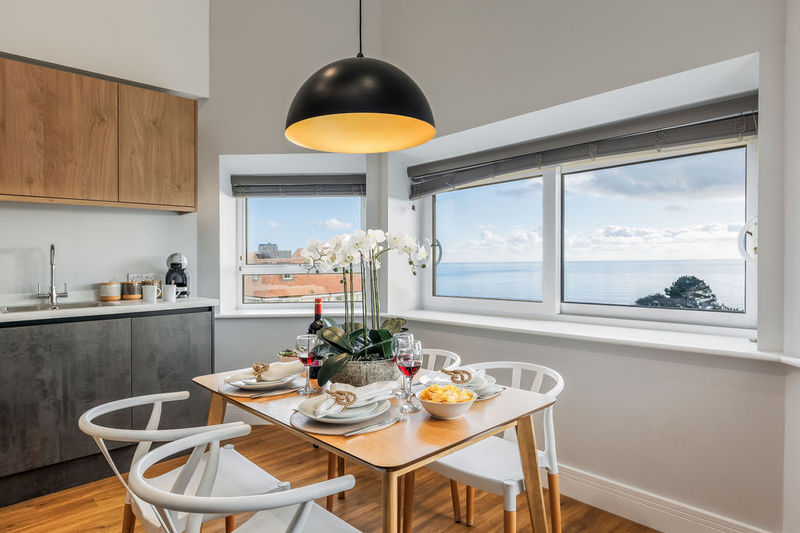
Nationwide serviced apartments provide separate living, dining and sleeping areas. These distinct spaces can help you organise work, meals and rest, so compare the layout with the routines you expect during your stay.
Flexiestays Bournemouth properties provide fully equipped modern kitchens. Kitchen access can support meal preparation and make it easier to arrange everyday routines around work.
Serviced apartments with high speed wifi feature smart TVs and modern appliances. These facilities add everyday comforts alongside separate rooms and kitchen access.
Connectivity and repeat bookings
A stable internet connection can influence whether a business guest chooses the same apartment again. For example, a consultant returning to Bournemouth may value Wi-Fi that supports calls, document sharing and evening planning. Repeat bookings also depend on familiar access: clear instructions and a connection that works across the apartment reduce friction on arrival.
For a longer stay, small details become part of the routine. Guests staying 7 or more nights may benefit from a private Wi-Fi key for their apartment. It gives them a consistent way to connect, rather than relying on a shared password that could change during the stay. That continuity can make a fully furnished apartment feel easier to settle into.
- A returning guest can reconnect using familiar apartment-specific access.
- A couple working remotely can use separate devices without sharing login details.
- Families can stream or browse across connected devices after a day out.
- A guest arriving late can follow the same written sign-in steps as before.
These examples show why connectivity matters to the guest experience, not just the listing. A private key for each apartment can also help accommodation teams manage access for individual stays. Clear joining instructions, a visible network name and a straightforward sign-in process make the first connection easier to understand. Guests remember the practical details that let them get on with work or downtime.
A worked example involving a property with 120 apartments illustrates the operational side. Replacing shared passwords eliminated 72 manual password changes a year in that example. Fewer manual changes can simplify administration, while apartment-level access gives each stay a distinct connection arrangement. These details may support a smoother experience for both guests and the team managing arrivals.
Reviews can make connectivity part of an apartment’s online reputation. A guest describing a successful video meeting or clear Wi-Fi instructions gives future visitors more useful context than a general comment. If several reviews mention the same connection issue, that pattern may influence a future booking. Specific feedback can also help accommodation teams identify where the arrival process needs attention.
For families booking a longer visit, reliable access can sit alongside room to relax and everyday facilities. A parent might need to check work messages while children use a smart TV or browse on another device. When the connection, apartment layout and fully furnished facilities suit the group’s routine, the whole stay can feel more workable. Returning guests then have a concrete reason to choose familiar accommodation again.
Flexiestays Bournemouth
Flexiestays Bournemouth is a relevant next step for travellers weighing internet access against the space and practicalities of their stay. Its serviced accommodation includes Tower House Apartments Hotel, Cliff Heights Apartments Hotel, Cliff Manor Apartments Hotel and Shore Retreat Apartments Hotel. These names give you a starting point for comparing apartment options, rather than treating every business trip as a standard hotel-room stay.
For a work-focused visit, consider how the accommodation will fit around your working day. Fast Wi-Fi supports online tasks, while a smart TV offers an option for downtime. Self-check-in is available and can suit guests who prefer an independent arrival. Set your priorities before choosing: connection, layout, arrival arrangements or a balance of all three.
The right stay can also depend on how long you expect to be away. A brief work visit and an extended assignment call for different routines, so consider whether you want a furnished apartment base rather than a room used mainly for sleeping. Short-term and long-term stays are available, with flexible payment options including a 25% deposit to secure a booking and the balance paid later.
Think about the details that will make the stay workable. A remote worker may value having internet access alongside space to pause between tasks. Someone travelling for meetings may prioritise arrival arrangements and a comfortable place to return to. Guests can also benefit from exclusive discounts and 24/7 local support, adding practical assistance to the accommodation itself.
Before settling on an option, weigh the available features against your trip’s purpose and length. The four named apartment hotels offer a clear place to begin comparing serviced stays. Focus on the facilities that will matter during your working hours and time away from the desk, rather than choosing on a Wi-Fi label alone.
Contact Flexiestays Bournemouth to discuss your stay.
Frequently asked questions
Long-term serviced stays include utilities and Wi-Fi in the fixed price. For a short booking, inclusions depend on the property and rate shown for those dates. For example, the Tower House Apartments Hotel details state that all bills are included. Comparing the booking terms with the facilities list helps clarify what is covered before you plan a longer stay.
Look for a property listing that names Wi-Fi as an included amenity, then compare its other details with your work needs. The Cliff Heights Apartments Hotel listing is one example of a serviced apartment option. For remote work, consider the connection information alongside the apartment layout, check-in arrangements and facilities, rather than treating the Wi-Fi label as a measure of speed.
This is a starting nightly rate for that property, not a monthly price or a guide to every apartment. Longer bookings may have different rates. Compare the total for your dates and stay length, and account for which bills and facilities are included when assessing the overall cost.
Long-term stays include Wi-Fi in the fixed price. For a short booking, check the stated inclusions and terms for that specific rate. The booking details are also where to look for any data-use conditions, since access to Wi-Fi alone doesn’t explain how usage is managed. This distinction can matter for work involving regular video calls or large file transfers.
Reviews can offer useful examples, but an overall rating doesn’t measure Wi-Fi reliability on its own. Look for comments describing what guests did online, such as joining work calls or uploading documents, and whether they mention a particular room or part of the apartment. Specific experiences provide more context than a brief rating, while different devices and usage patterns can shape each guest’s experience.