
At the far eastern edge of the bay stands Hengistbury Head, a low headland covered in heather where Bournemouth's neat seafront turns into something wilder and more ancient. It combines a nature reserve, a protected archaeological site and one of the best short walks the area has to offer.
In brief
- Past Southbourne, the headland stands guard over the entrance to Christchurch Harbour.
- Climbing steadily up Warren Hill brings far-reaching views towards the Isle of Wight when the day is clear.
- In season, a land train and a small ferry both operate, useful if your legs need a rest.
- Bring sturdy footwear and a windproof layer, since the summit is fully exposed to the weather.
Climbing to the summit
Starting from the car park and visitor centre by the beach huts, the main track heads gently inland beside the harbour before the land starts to climb. The ascent of Warren Hill is brief but constant, and it delivers one of the widest panoramas anywhere on this stretch of coast: the full curve of the bay towards the pier in one direction, Christchurch Harbour and its reed beds in the other. There is no need to hurry, with benches along the way and plenty worth pausing for.
Picking a path
The complete circuit is not compulsory. An easier alternative follows the level harbour-side path towards the sandspit and back, ideal for pushchairs or anyone keen to skip the climb. The longer loop takes in the summit, the old quarry and the seaward flank, adding up to roughly two miles depending on how far you roam. Underfoot conditions can turn sandy and uneven, so choose trainers or walking shoes over sandals.
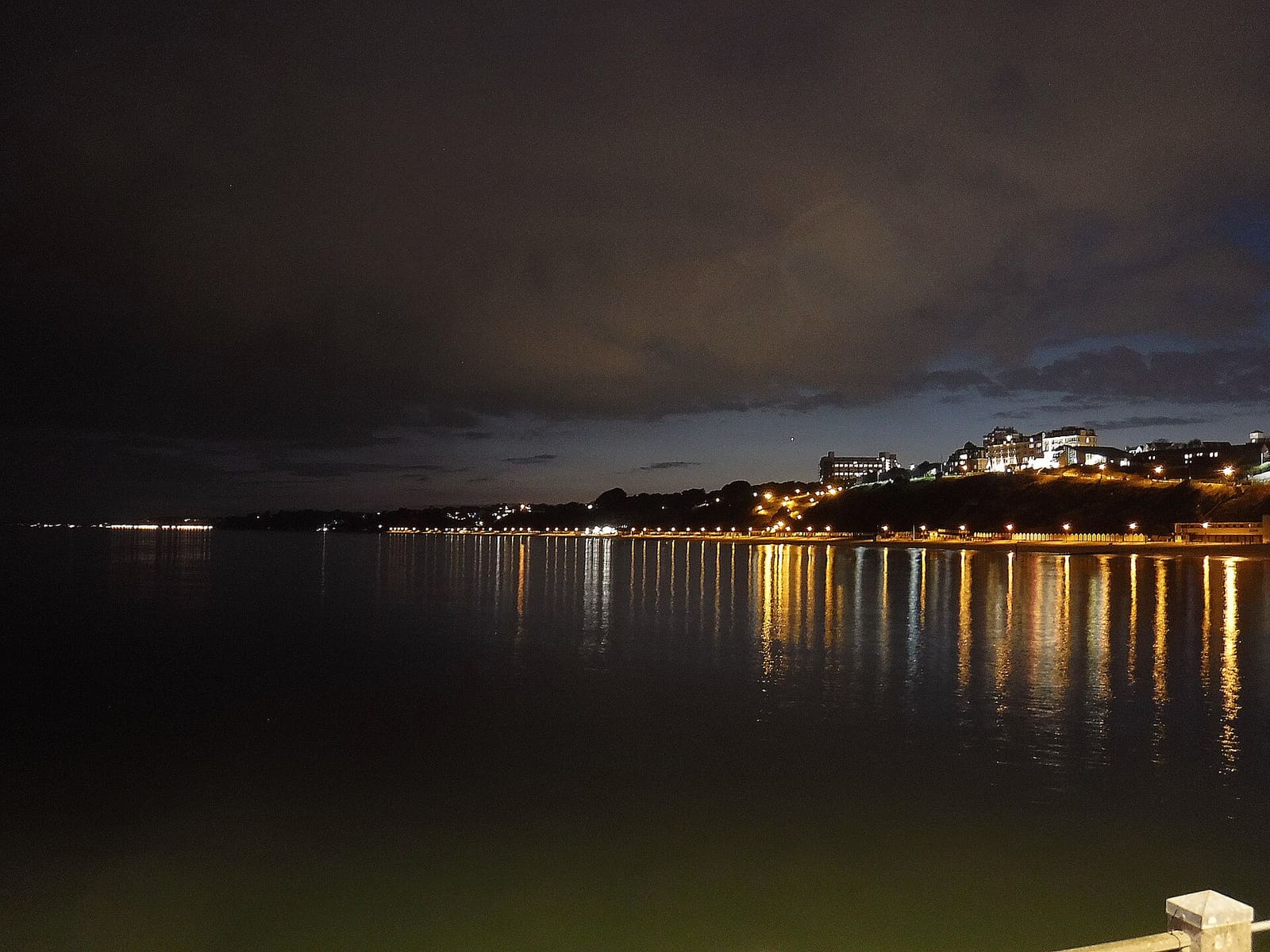
Continuing to Mudeford Spit
Past the headland, a thin strip of sand stretches across the harbour entrance towards Mudeford. Here stand the well-known beach huts, a densely packed line of brightly coloured cabins ranking among the most sought-after in Britain. Reaching the far end of the spit is a decent walk, so many opt for the small land train running from near the visitor centre through the warmer months, then stroll back at their own speed. A small ferry links the tip of the spit to Mudeford Quay across the harbour mouth. Its schedule moves with the season and the tide, so confirm the times before heading out rather than assuming.
On the harbour side, the water stays calm and shallow, suiting paddling, whereas the seaward beach opens onto the bay itself. Strong currents run through the harbour entrance on this active piece of coastline, so keep children nearby when close to the mouth and never attempt to swim across the channel.
History and wildlife
This headland has been inhabited for thousands of years and once served as a significant Iron Age trading port. The visitor centre and its interpretation boards tell that story, and the site holds protected status for both its archaeology and its habitats. Birdlife is plentiful across the heath and harbour: look for waders on the mudflats, warblers among the scrub, and migrating birds touching down here in spring and autumn as their first or last stop on the journey. Take binoculars if you own a pair, and step carefully around any ground roped off for nesting.
One note on conditions: the summit is truly exposed, so a calm day down in town can still feel windy up here. Pack an extra layer even during summer, and stay well away from the crumbling edges on the seaward side.
Extending the day
This walk fits naturally alongside a stroll along Southbourne beach, the peaceful stretch of sand approaching it from the west, or a visit to Christchurch and its priory on the far side of the water. For practical information, opening details and directions to the visitor centre, see the Hengistbury Head listing, and find more walks and days out in our things to do hub.