Poole is a separate town, not a district of Bournemouth, and people who live there will correct you if you get it wrong. It was a working port for centuries before Bournemouth existed as anything more than heath and pine, and it still has the shape of one: a quay, an old town behind it, and a harbour too large to take in from the shore. From a base in Bournemouth it is about ten minutes on the train, which makes it the most rewarding day out available.
A cod port that got rich, then got quiet
The money that built Poole came from fish. Through the eighteenth century its merchants sent ships to Newfoundland, sold salted cod into southern Europe, and came home with wine, oil and salt. For a stretch it sent more ships to North America than any other English port. The profits went into buildings, which is why the streets behind the Quay are Georgian brick rather than Victorian villa. When the Napoleonic Wars ended, so did the monopoly, and the trade fell away within a generation. Scaplen’s Court, a merchant’s house from around 1450, survives as one of the oldest domestic buildings in Dorset.
Getting there from Bournemouth
Trains run from Bournemouth to Poole in roughly ten minutes. The station leaves you north of the water; walk south through the High Street to the Quay. The morebus m1 and m2 cover the same ground by road through Westbourne, Branksome and Parkstone. Slower, but they stop where people actually live. For Sandbanks, take the Purbeck Breezer 50 from outside Bournemouth station; it runs open-top in decent weather and is the only bus route that crosses the chain ferry. The wider network is in our guide to getting around without a car.
The Quay and the Old Town
Poole Quay is a working waterfront that happens to be lined with pubs. Boats load for harbour cruises, children fish for crabs off the wall with a bucket and a line, and the lifting bridges go up to published times that will strand you on the wrong side if you are not paying attention. Poole Museum reopened in late 2025 after years of closure: six galleries over five floors, free entry, and an Iron Age logboat pulled from the harbour that is the largest found in southern Britain. The Cockle Trail, a self-guided loop marked by brass cockles set into the paving, takes about an hour and beats any list of sights. Come on a weekday if you can.
Out on the water
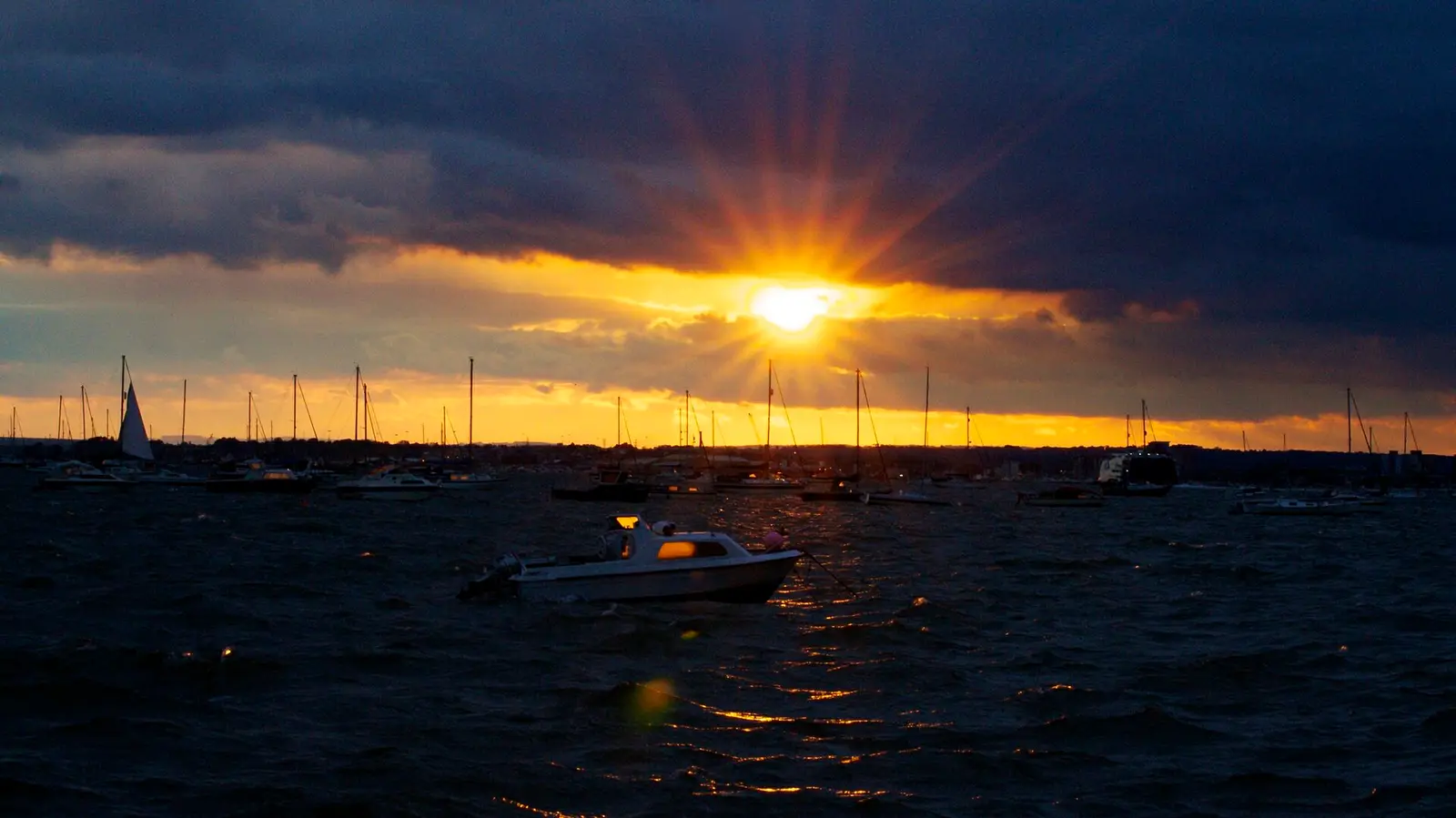
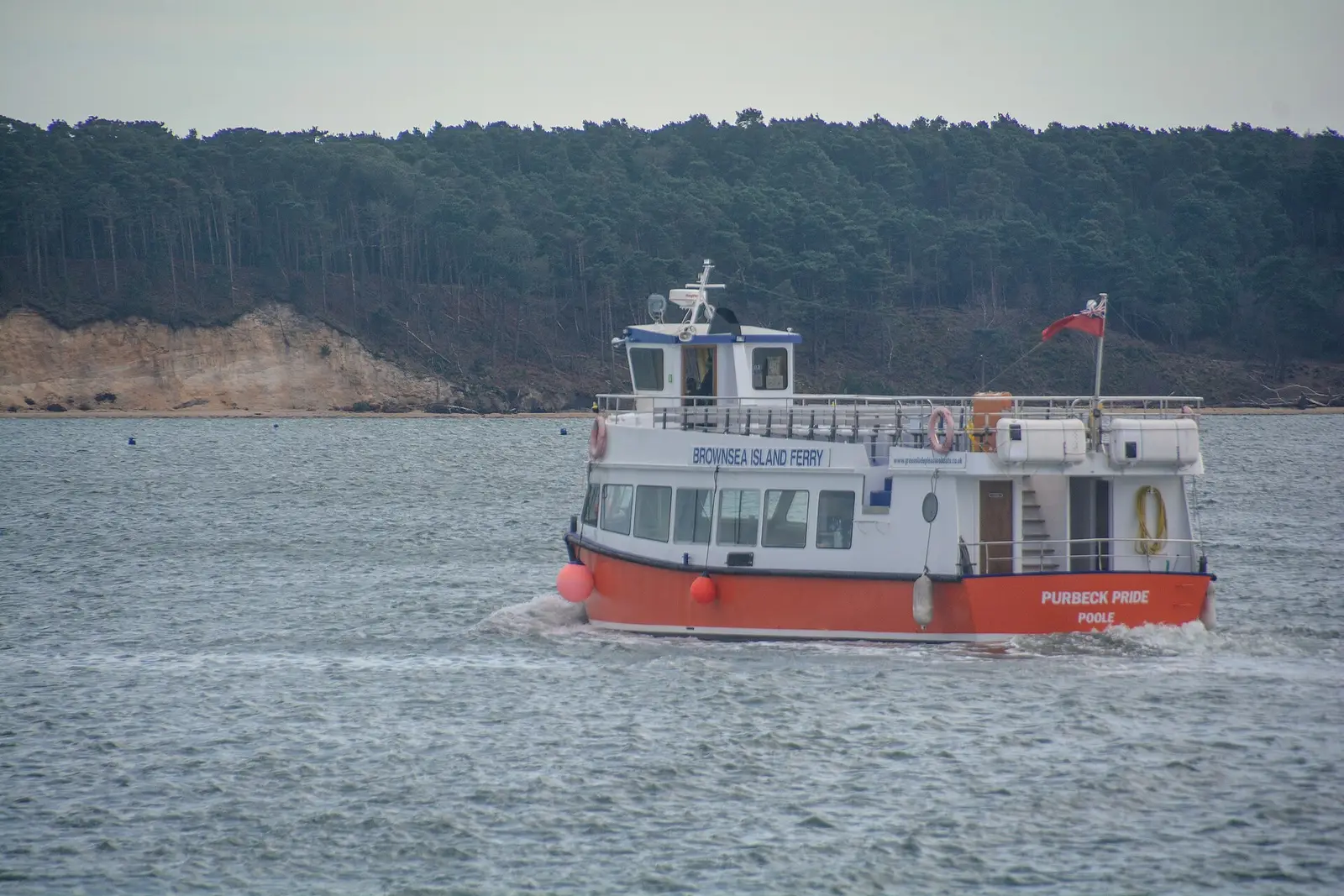
The harbour covers around 36 square kilometres and is famously shallow, averaging little more than half a metre deep. You will hear it called the second largest natural harbour in the world. Several harbours claim that title, so treat it as a pub fact rather than a settled one. Brownsea Island sits near the harbour mouth, reached by foot ferry from the Quay or Sandbanks, and holds one of the strongest red squirrel populations in southern England and a lagoon that matters enormously to overwintering birds.
Sandbanks and the western beaches
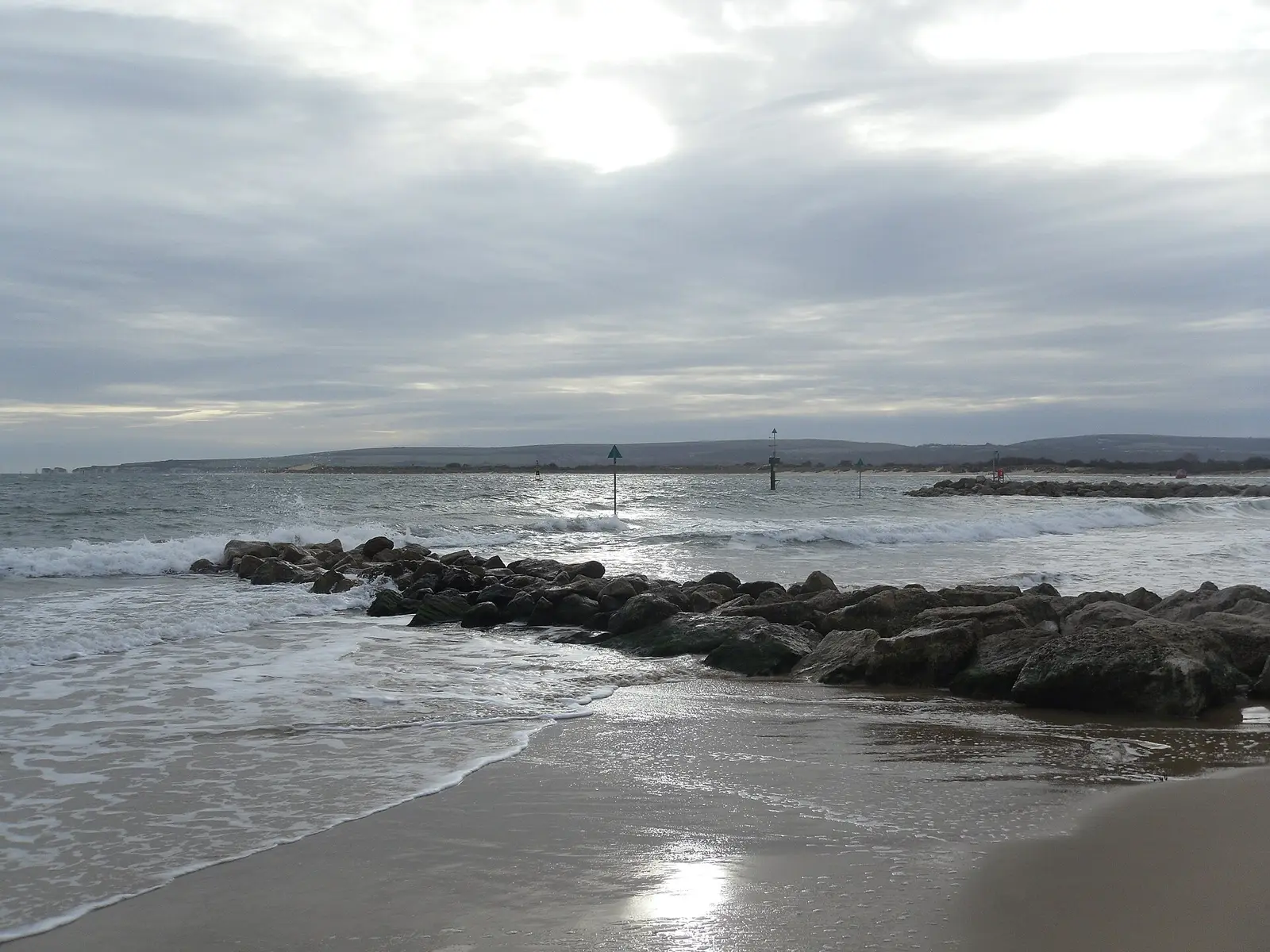
At the harbour mouth, the peninsula narrows into Sandbanks: a spit of sand famous for two things that seem to contradict each other: some of the most expensive real estate in the world, and a public Blue Flag beach that costs nothing to visit. Between there and town, Branksome Chine and Canford Cliffs are the quieter middle ground, pine-sided valleys running down to sand, with Rockwater at the foot of the chine for a roof-terrace lunch. The whole coast is compared in beaches by neighbourhood.
Gardens, parks and where to eat
Compton Acres sits on the cliff above the harbour: five themed gardens across roughly ten acres, including a Japanese garden and an Italian terrace. Poole Park is the other green set piece, 110 acres around a lake, with a miniature railway and no admission charge. For food, the cluster worth the detour is Penn Hill. Jenkins & Sons cooks over charcoal in a converted 1920s fishmongers, and Baffi on Haven Road in Canford Cliffs does Neapolitan pizza from a wood oven. Lighthouse, opposite the bus station, is the largest regional arts centre in the country and home to the Bournemouth Symphony Orchestra.
A day out rather than a base
If you have already booked in Bournemouth, keep it that way. For a short trip Poole is better visited than stayed in. The beaches you want are further out, the evenings are thinner, and the town centre has taken the same knocks as high streets everywhere. What Poole does better is ordinary life: a real working high street, less student churn, a quieter Sunday. On a long stay it becomes the place you go when Bournemouth starts to feel like a resort.
The chain ferry, and what lies beyond
At the end of Sandbanks a chain ferry hauls itself across the harbour mouth to Shell Bay, roughly every twenty minutes. It is cashless and vehicle tolls are paid online, so check the operator first. On the far side is Studland: dunes, National Trust beaches, and the coast path out to Old Harry Rocks. Swanage lies further along the same bus route. Heading the other way from Bournemouth, Christchurch does much the same job in reverse.