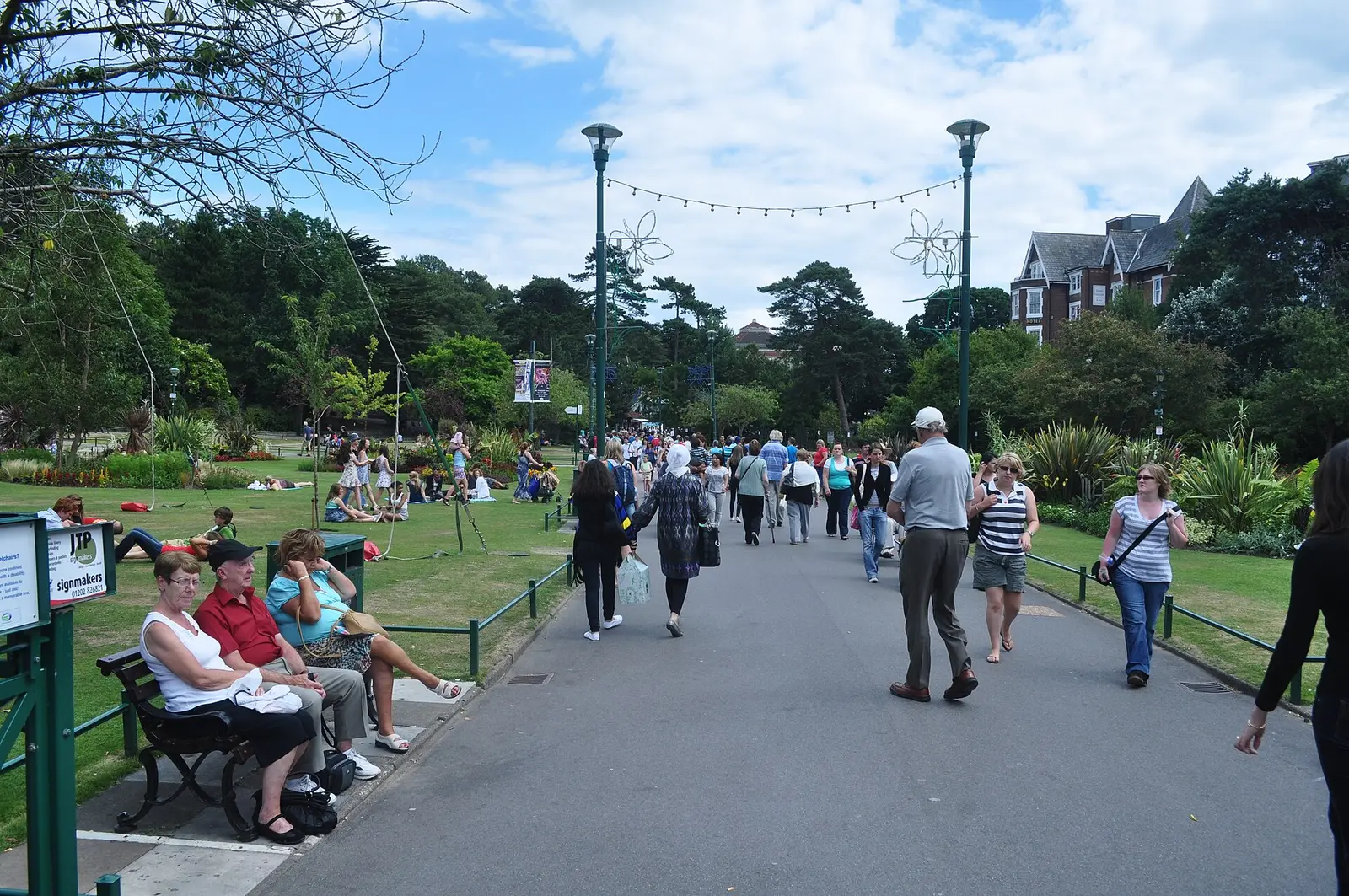
Westbourne sits about a mile west of Bournemouth town centre, on the slope where the borough runs into Poole. It behaves like a village rather than a resort: two shopping streets, a listed Victorian arcade joining them, and a wooded ravine falling away to the sea behind. Very few people come here for the day. People stay here because they want a neighbourhood to come back to, somewhere to buy bread on a Tuesday, get a haircut, sit outside a café that is not charging seafront prices, and are content to walk downhill for the water.
What it is like to stay here
The housing is late Victorian and Edwardian, generously sized, much of it long since divided into flats. Red brick, bay windows, mature trees, roads that tilt towards the cliff. That gradient governs daily life here: everything is easy on the way out and slower on the way back.
Evenings go quiet early. Shops shut, the restaurants are not late-night operations, and by mid-evening the pavements belong to dog walkers. The exception is Poole Road itself, a main route between Bournemouth and Poole that carries real traffic: a room at the front of a building on it is a different proposition from one on a side street behind.
The arcade and the shops
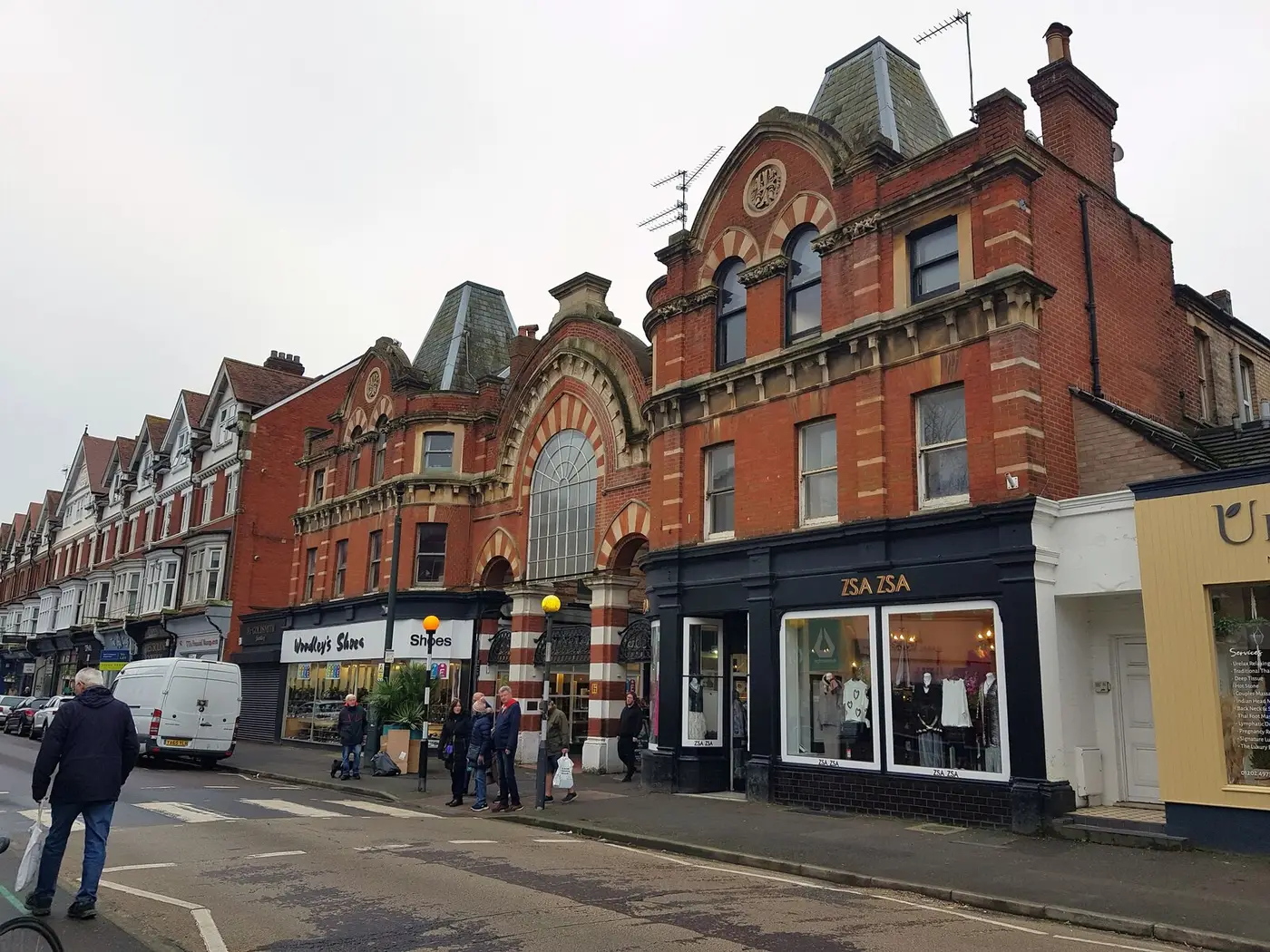
Westbourne Arcade was built in 1884–85 by Henry Joy, who also built the Gervis Arcade in the town centre. It is Grade II listed, glass-roofed and gothic in its detailing, with carved heads at the top of the drainpipes, and runs straight through from Poole Road to Seamoor Road. Inside are independent shops rather than chains, a café or two, and a very small cinema at number 14 with sofas instead of rows.
The arcade is short. Treat it as a pleasant few minutes, not an afternoon. The wider high street matters more day to day: an M&S Foodhall and a Tesco Express for groceries, a pharmacy, hairdressers, charity shops worth a look.
Eating and drinking
For its size, Westbourne feeds people unusually well. Chez Fred has been frying fish on Seamoor Road since 1989 and serves unlimited chips, for better or worse. Gossip does Venetian-style small plates and wood-fired pizza on Poole Road. Koh Thai Tapas is the reliably busy one, worth booking at a weekend. Renoufs deals in cheese and wine, a good answer to a wet evening in a rented kitchen.
Mornings are well covered, Chines Coffee House and Westbird among others, and The Westbourne on Poole Road is the straightforward pub option. What the area does not have is a late scene. Kitchens wind down early by resort standards and there is no club. For that you go into town and come back in a taxi.
Alum Chine and the beach
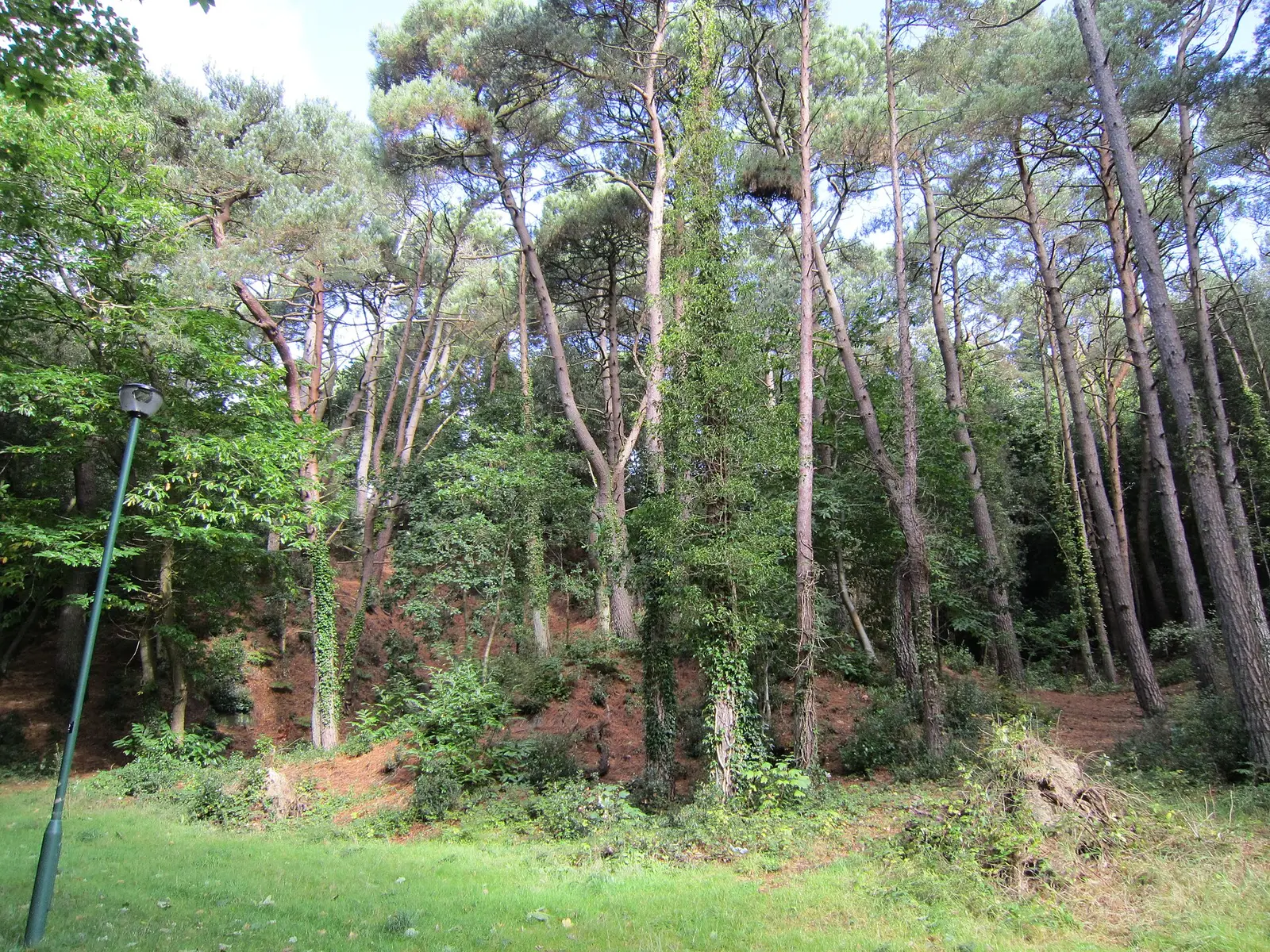
Alum Chine is the largest of Bournemouth’s chines and the reason Westbourne works as a base: a planted valley carrying you from the residential streets to the promenade without walking beside traffic. A pedestrian suspension bridge, built in 1903, crosses it high up. The tropical planting alongside dates from the 1920s and has been closed at times over landslip risk, so check before you rely on it.
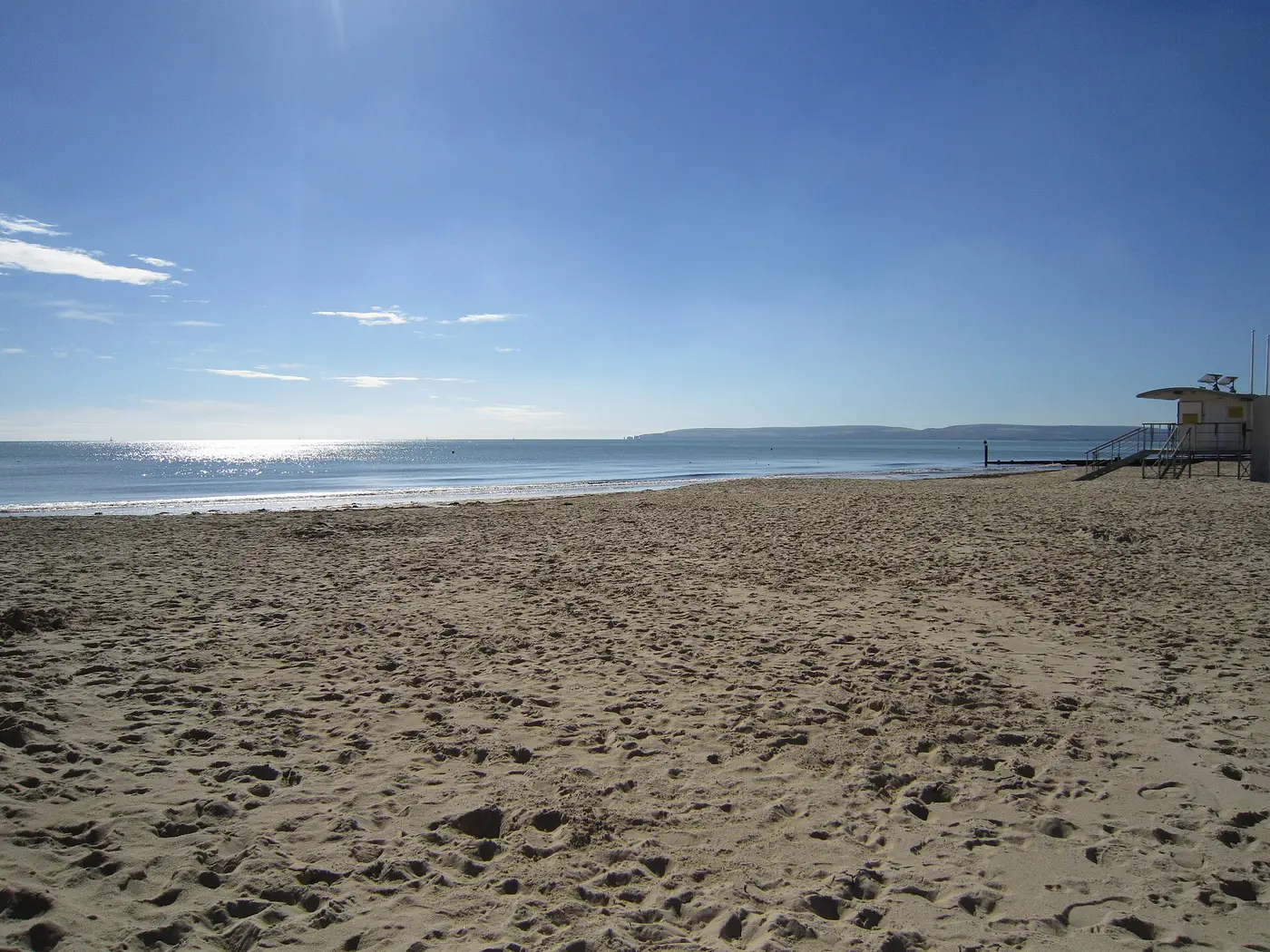
Alum Chine beach at the bottom holds a Blue Flag, with a kiosk, toilets, showers, RNLI lifeguards through the season and a large pirate-themed play area with a paddling pool. Dogs are off the main beach from 1 May to 30 September. It is quieter than the sand either side of Bournemouth Pier, and much quieter than Boscombe, which is the point.
Getting around
Morebus m1 and m2 run frequently along Poole Road through County Gates, east into Bournemouth Square and west to Poole. Branksome station is about a mile away, on the line between London Waterloo and Weymouth. Between the two you can manage a week here without a car; there is more on that in our guide to getting around without a car.
If you drive, be realistic about parking. Space near the shops fills through the day, and the residential roads towards the cliff are tighter than they look on a map.
Who it suits, and who it does not
Westbourne rewards a long stay. Remote workers, families with small children, couples who would rather cook twice a week than eat out seven times, and repeat visitors all end up here. It also holds up in February, when the seafront empties and a working high street is worth a great deal.
It is the wrong choice if you want the beach outside your door, if you are here for two nights and want the bars in walking distance, or if the climb up from the sea would be a real obstacle. The centre or the West Cliff suit those stays better, and our neighbourhood guide sets them side by side.
Nearby
West of County Gates the coast becomes Branksome and Canford Cliffs, and then Poole proper. Inland, the Bourne stream rises near Coy Pond Gardens and runs down through the Upper and Lower Gardens to the pier. On Alum Chine Road, a small memorial garden with a model lighthouse marks the site of Skerryvore, where Robert Louis Stevenson lived from 1885 to 1887 and wrote Strange Case of Dr Jekyll and Mr Hyde. The house was bombed in November 1940. What replaced it is easy to walk past and worth not walking past.