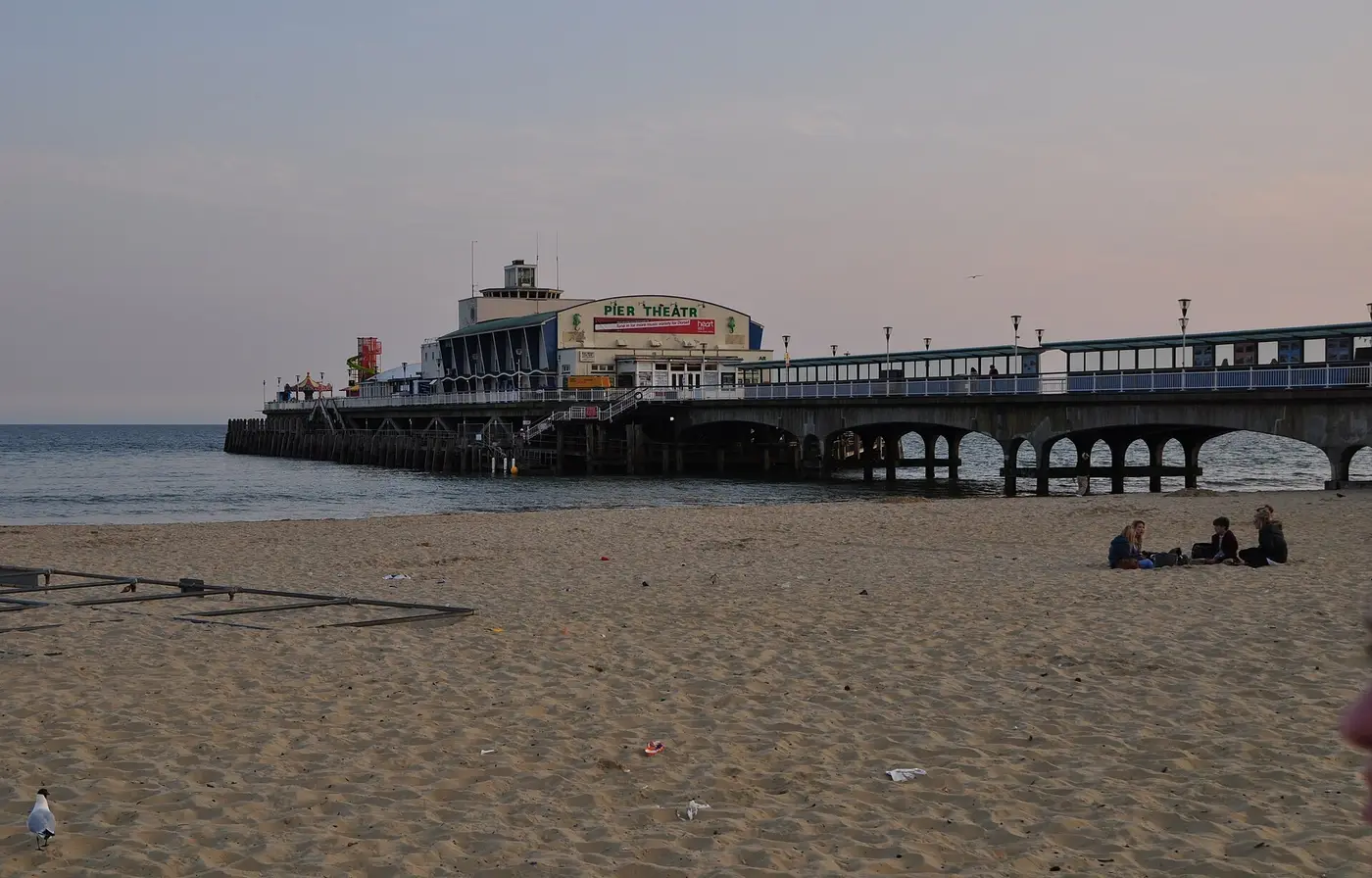
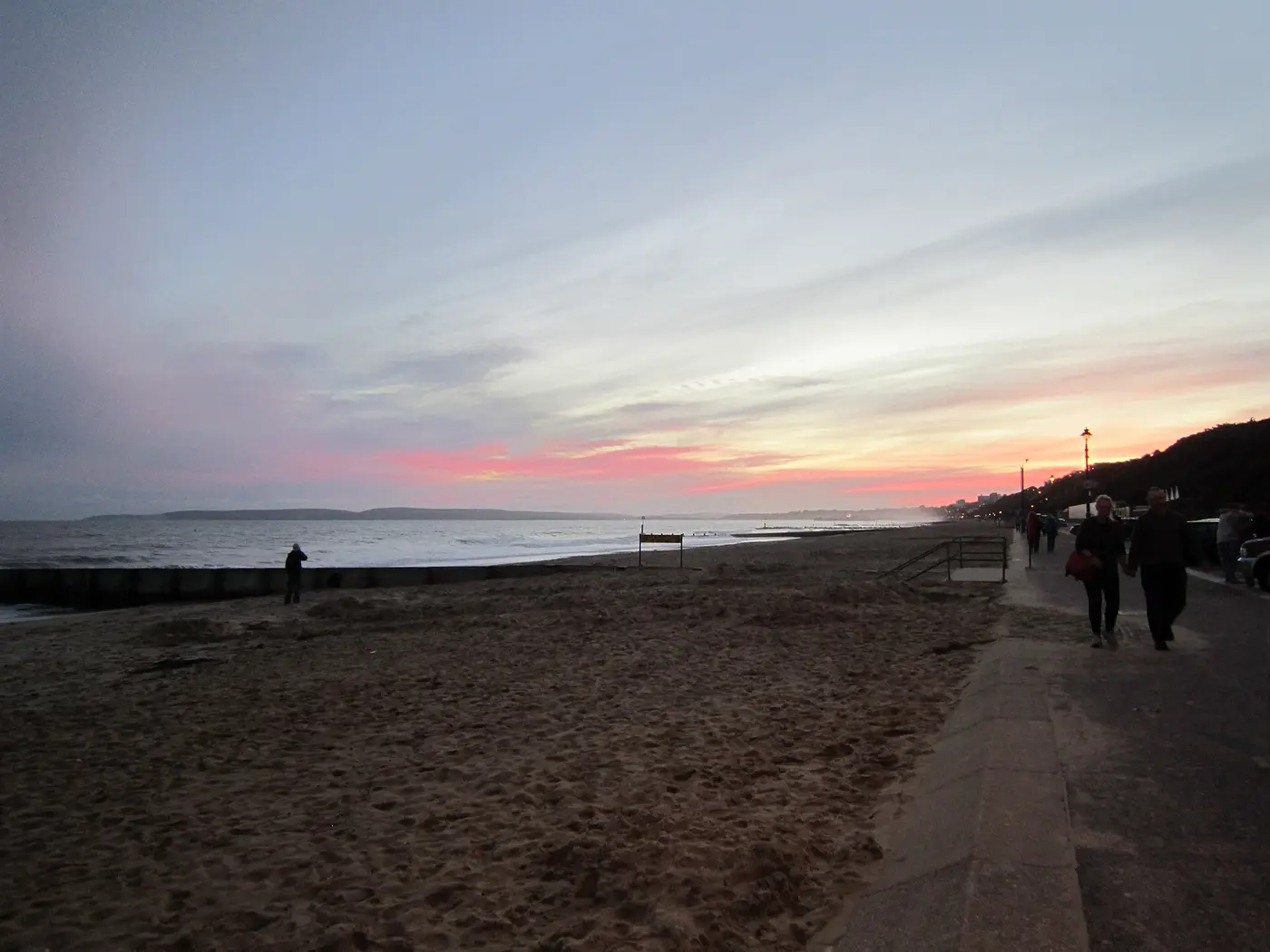
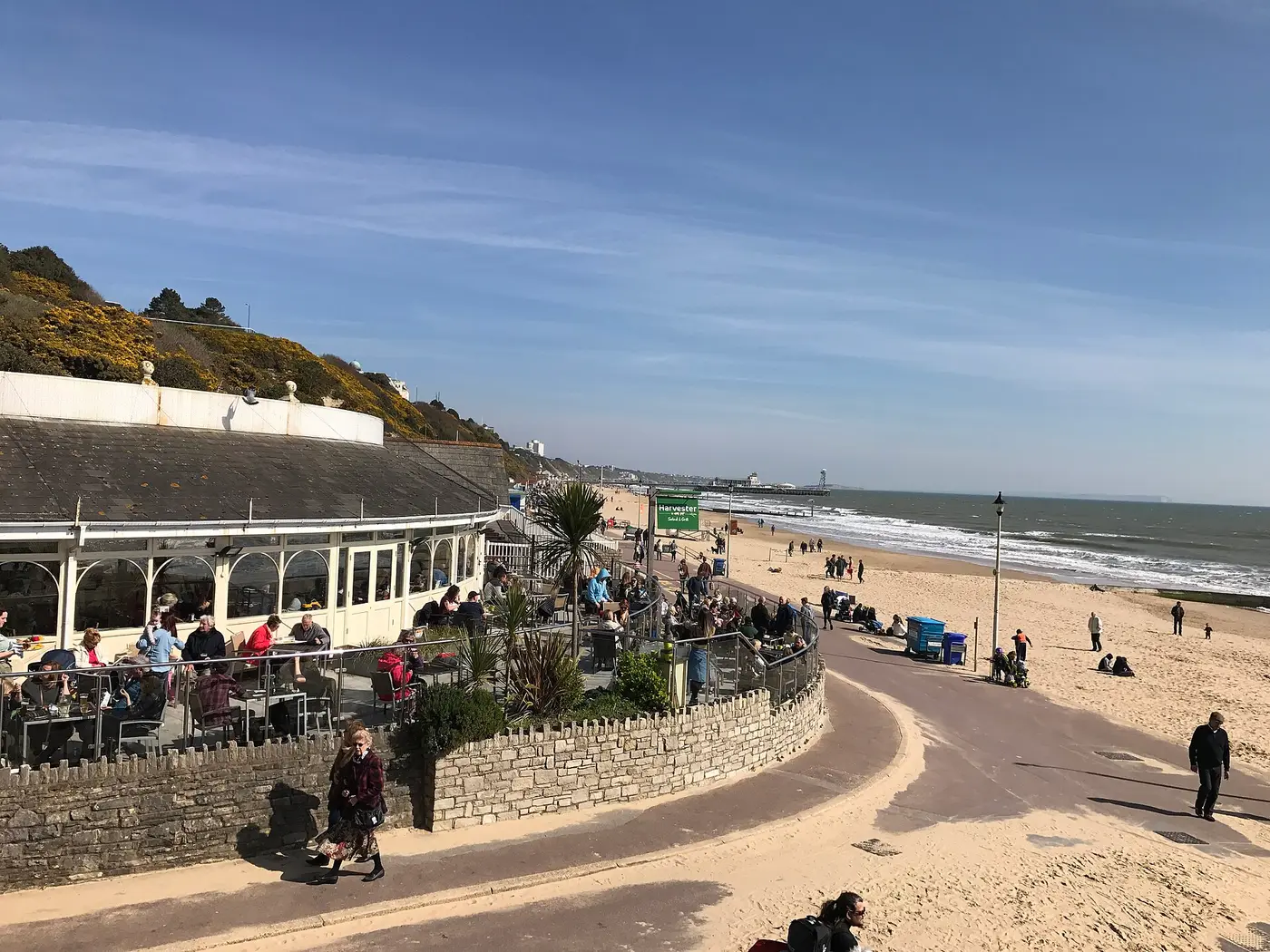
Sand runs for miles in both directions here, but Bournemouth Beach means the section either side of the pier: the part with the mini golf, the amusements, the beach office and the crowd. It is the most worked-on stretch of coast in the bay: groyned, replenished, patrolled longer than anywhere else and swept clean before most people are awake. Whether that appeals depends on what you want from an afternoon. If you are staying in the centre it is the closest sand you have, and on a clear evening, with the light going long down the water, it is genuinely hard to beat.
History and how it formed
The cliffs behind the beach are Eocene sands, mostly somewhere between 42 and 50 million years old, and the beach is largely what has eroded out of them. The town is a great deal younger. Lewis Tregonwell bought land here in 1810; in 1836 Sir George Tapps-Gervis commissioned a planned marine village from the architect Benjamin Ferrey; the railway arrived in 1870 and the population climbed from around 6,000 to 37,000 inside two decades. The iron pier followed in 1880.
What to expect
In July and August this is the busiest sand in Bournemouth by a wide margin, and the promenade behind it moves at walking pace. Arrive at eight in the morning or after six in the evening and it is a different beach. Wide, flat, easy to walk end to end, with the pier as the only fixed point. Out of season the kiosks thin out but the sand itself does not change.
Swimming and safety
RNLI lifeguards cover the Bournemouth East and Bournemouth West sections daily from 10am to 6pm, and the season here is one of the longest in the bay: currently 28 March to 27 September, alongside Boscombe East and Sandbanks. Swim between the red and yellow flags, which mark water closed to boats, personal watercraft and windsurfers. The LV= KidZone wristband scheme runs across the peak weeks. Dates move year to year, so read the beach office board rather than trusting anything you looked up in advance.
Facilities
Toilets, accessible toilets, showers and drinking water are spread along the promenade, with the beach office handling everything else. Beach wheelchairs can be borrowed in season and the land trains are wheelchair-friendly. Cooking is limited to the electric BBQ hotplates and restricted evening use of disposables; open fires and camping are not allowed. Bournemouth Pier is the landmark everything else is measured from.
Dogs
Dogs are not permitted on Bournemouth Beach between 1 May and 30 September. From 1 October to 30 April they are welcome on the sand, though leads are required year-round on the promenade, the pier, the zig-zags and the footpaths. Guide dogs are exempt when working and in harness. In summer, the nearest year-round dog stretch runs west from Durley Chine towards Middle Chine.
Getting there and parking
Bath Road North and Bath Road South are the closest car parks, both feeding down to Pier Approach. Bournemouth railway station is about 1.6 miles inland; the walk down through the Lower Gardens is mostly downhill and considerably more pleasant than the queue for a space in August. Morebus runs the seafront corridor east towards Boscombe.
Nearby
The pier is the dividing line. East of it the sand continues under the East Cliff and on to Boscombe Beach; west it narrows into the chines. Our beaches by neighbourhood guide puts the sections side by side, and the full set is on the beaches hub.