Christchurch is not a suburb of Bournemouth, whatever the unbroken ribbon of housing between them suggests. It is an older town five miles east: a fortified Saxon settlement centuries before the resort existed, with a Norman castle mound and a parish church longer than several English cathedrals. Two rivers arrive from opposite directions, the Avon down from Salisbury and the Stour across Dorset, and meet behind a shingle spit before squeezing out to sea through a gap you could shout across. Nearly everything worth your afternoon stands within a few hundred metres of that junction.
Twynham, before the resort existed
The town was Twynham first, the place between the waters, and it kept that name until the priory changed it. Alfred the Great fortified the site against the Danes. Around 1100 the Norman lord Richard de Redvers began a castle here; what remains is a broken keep on a grassed mound and, beside the mill stream below it, the Constable’s House. It went up in the 1180s or 1190s as comfortable living quarters, and its tall round chimney is one of very few Norman examples still standing in England. Both sit open to the air between the high street and the water.
The priory
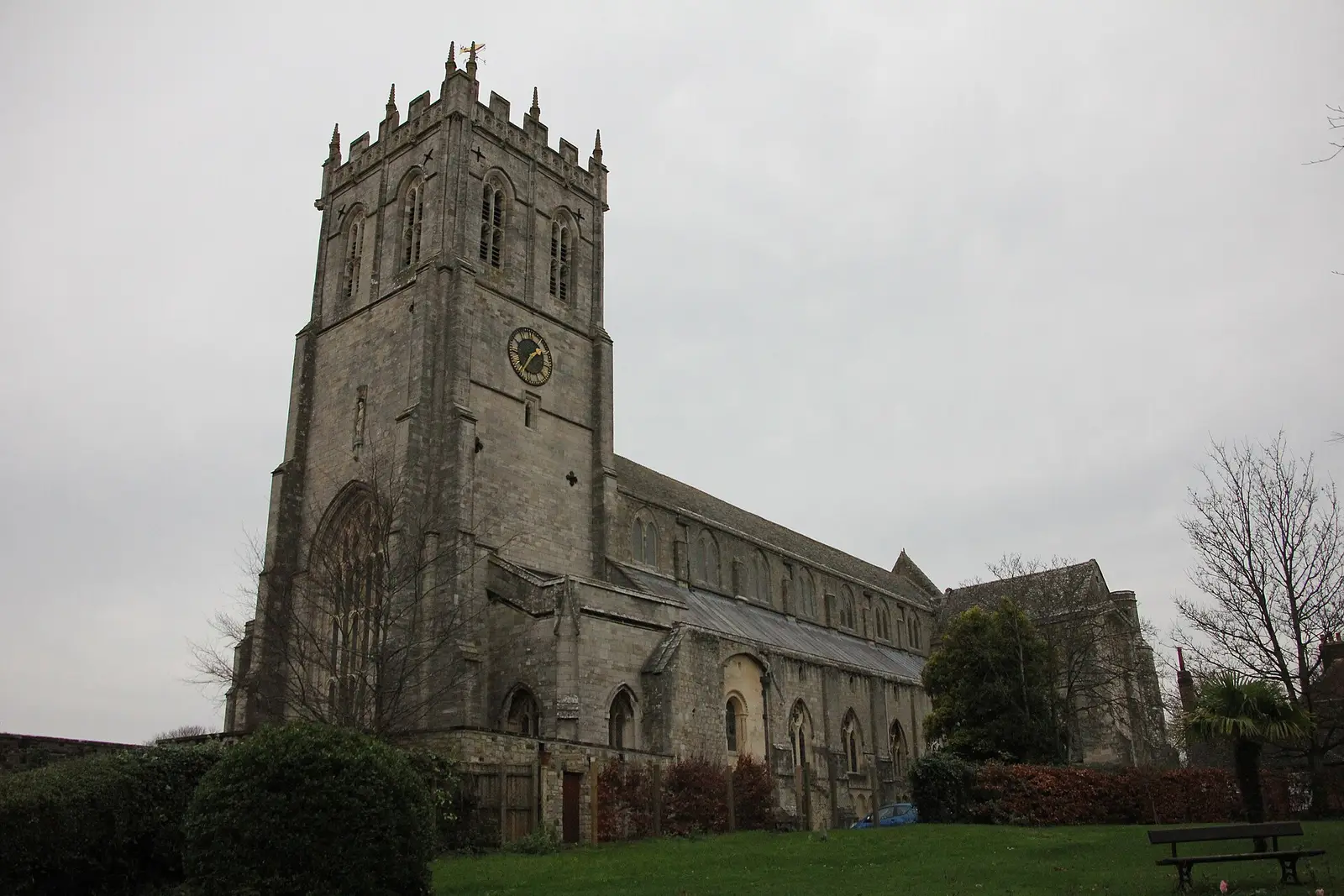
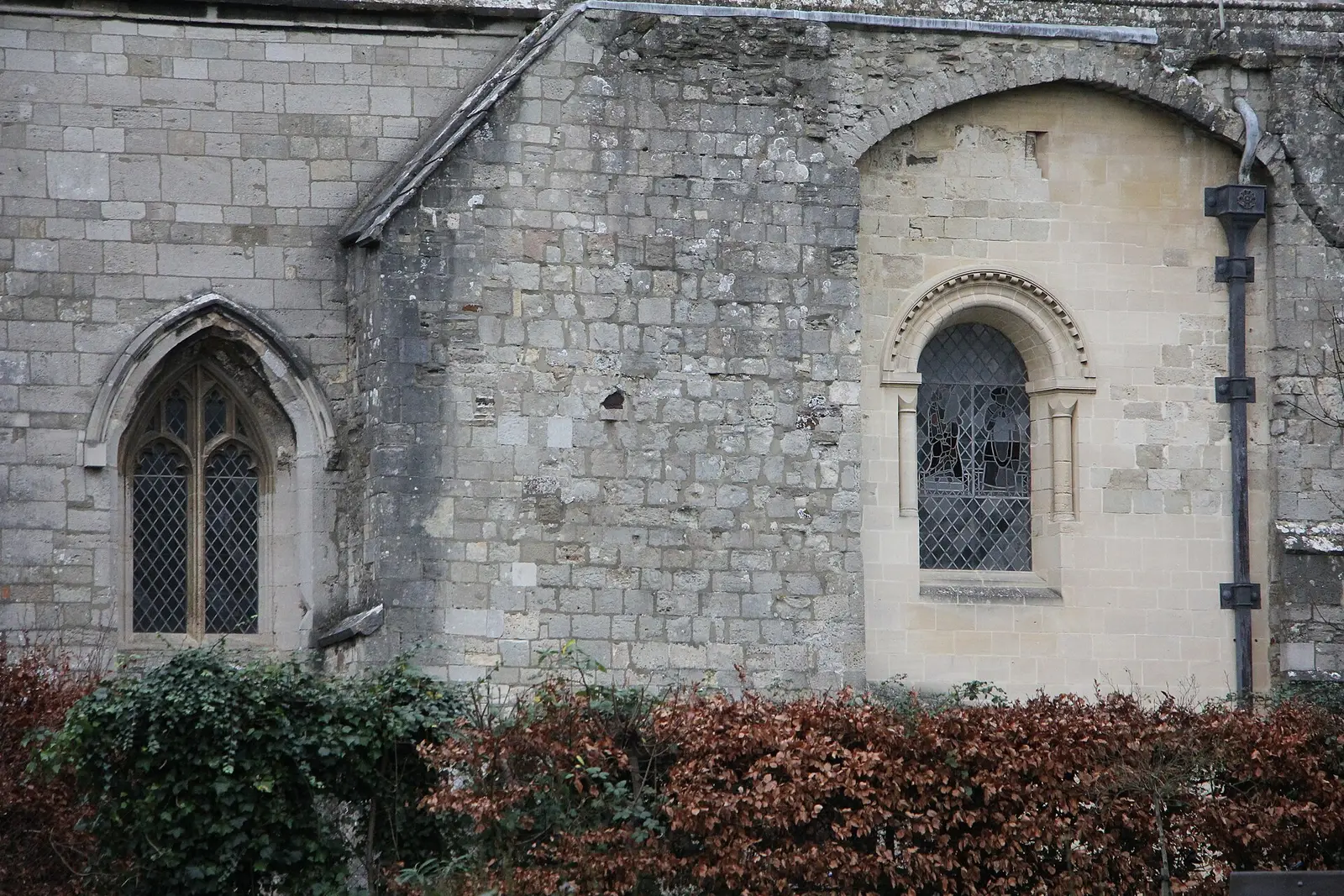
Christchurch Priory is the reason most people come, and it earns it. The church runs 311 feet from west door to east end: the longest parish church in England. The nave is heavy Norman work of about 1150; the central tower was rebuilt in the 1470s; the Lady Chapel carries pendant vaulting thought to be the first of its kind in the country. The priory was dissolved in 1539 and Henry VIII meant to pull the church down with it; the townspeople petitioned him, and in 1540 it was granted to the churchwardens and inhabitants of Christchurch in perpetuity. The name comes from the legend of the Miraculous Beam: cut too short by the builders, lengthened overnight by a carpenter nobody could account for.
The quay and the Quomps
Below the priory the ground flattens into a green called the Quomps, and on a warm Saturday it is the whole town’s back garden: rowing boats on the water, swans loitering for crusts, a queue at the ice cream hatch. Place Mill stands at the edge of it: a mill was recorded here in the Domesday survey, this one ground flour until 1908, and it now holds exhibitions. In early August the green fills up for Stompin’ on the Quomps, a free smooth jazz day that plays from noon until dark and asks only for a donation.
The harbour mouth, the spit and the huts
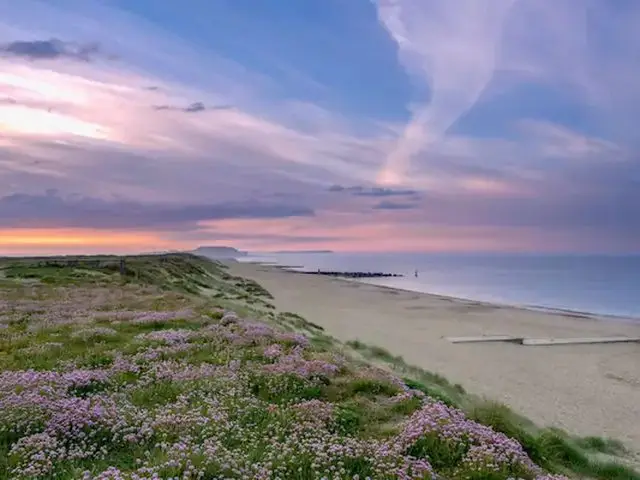
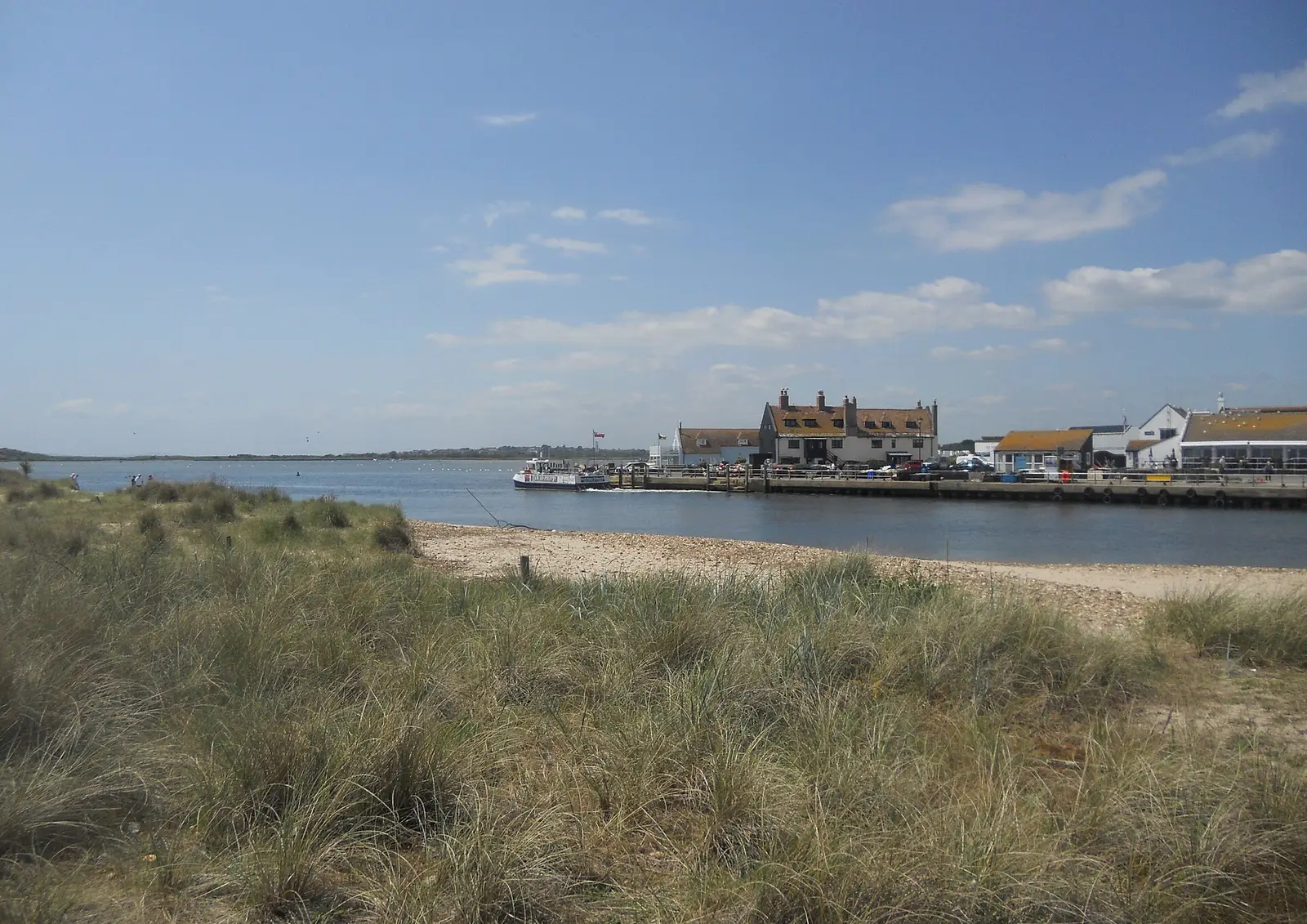
Christchurch Harbour drains through a single narrow channel called the Run, the most interesting hundred metres of water on this coast. Mudeford Quay sits on the east side, with fishing boats, a car park and a pub. Facing it across the gap is Mudeford Sandbank, a low spit hanging off the end of Hengistbury Head and lined with beach huts that change hands for sums well into six figures. They are not houses: overnight occupancy is limited to part of the year, and they are shut up all winter. A small passenger ferry shuttles across the Run in season, cash only, so carry coins. Do not swim the channel; spring tides run at several knots. The open sea side of the sandbank is a different matter, as is Avon Beach further east, which has a shop and café behind the sand.
Getting there from Bournemouth
Trains are the simple answer. Christchurch is the first stop east of Bournemouth on the South Western Railway line and the run takes under ten minutes. The station is a short, flat walk north of the centre. For the wider picture, see our guide to getting around Bournemouth without a car.
Buses take longer and show you more. Morebus route 1A goes out through Boscombe and Iford; the 1B and 1C take the coastal side through Southbourne and Tuckton. From roughly April to October there is a better option: passenger boats run from Tuckton Bridge, beside Tuckton Tea Gardens, down the Stour to the old Wick Ferry crossing, Christchurch Quay and Mudeford Sandbank. Walkers can reach the same water from Southbourne along the clifftop to Hengistbury Head, then ride the land train out along the spit: April to October, weather permitting, and nothing at all in winter.
A day out, not a base
Be honest about what Christchurch is. The high street is a market-town high street: banks, charity shops, familiar chains, nothing you came to Dorset for. Evenings are quiet, and a bar after ten means the last train back. The pleasures here are concentrated and outdoors, worth an unhurried afternoon rather than a week, which is why most people staying in the bay keep their base in Bournemouth and come out for the day.
What else is close
On the Bournemouth side of the harbour, The Riverside at Tuckton Bridge has a garden over the Stour and makes a sensible last stop before the bus home. Highcliffe Castle stands a few miles east above its own beach, with grounds you can walk and a tea room. Check opening before you go. The New Forest begins just beyond the Avon. In the other direction, Poole pulls off the same trick at a larger scale.