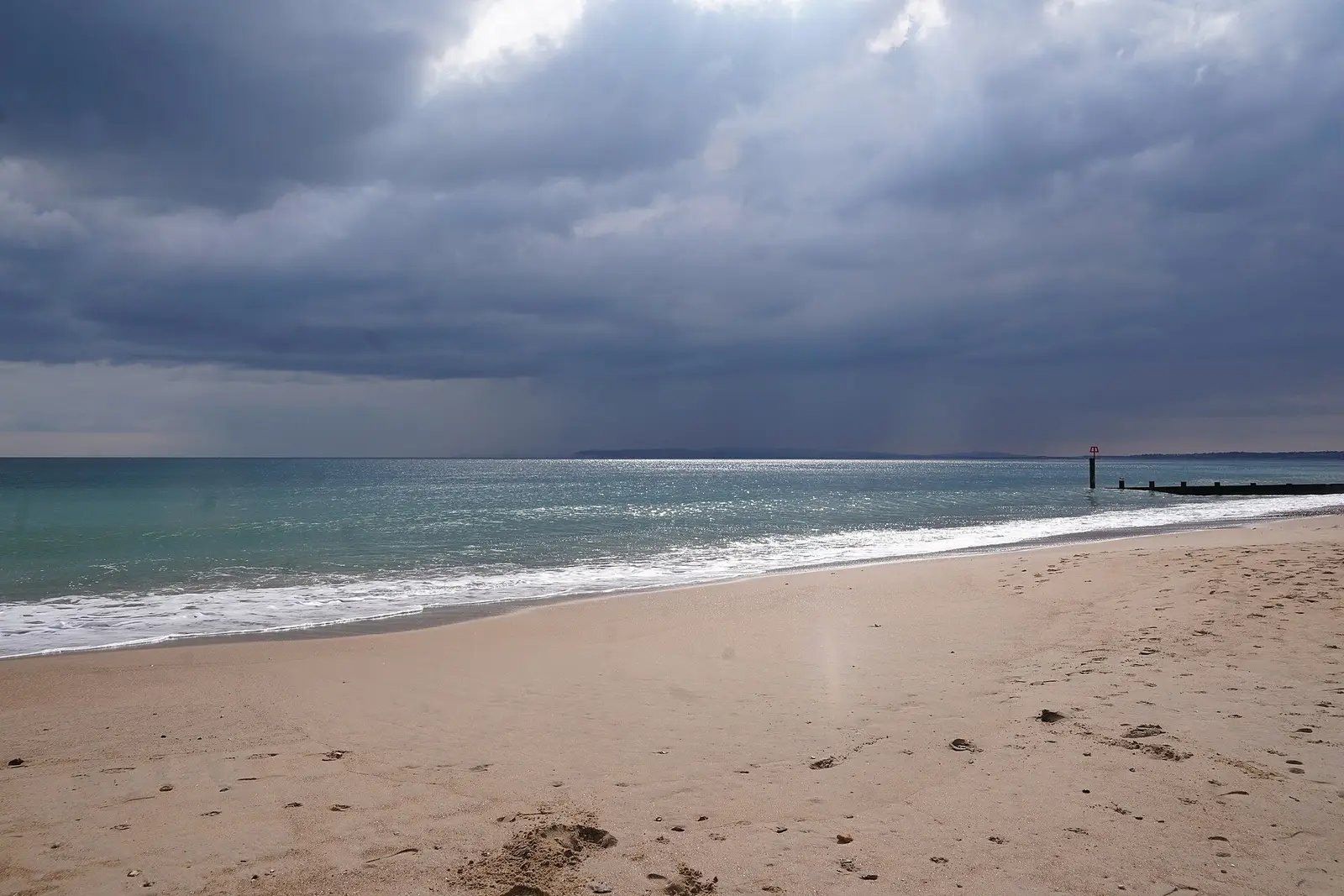
A week here is a holiday. A month is something else. Somewhere around day ten the beach stops being the point and the ordinary questions take over, where the proper supermarket is, whether the washing will ever dry, what to do about a prescription registered to a surgery two hundred miles away. Bournemouth handles all of it, because underneath the deckchairs it is a working town of libraries and dentists and school runs that happens to have the sea at the bottom of the hill. It is arranged differently from the version you meet on a weekend, and it takes a fortnight to find the seams.
The weekly shop
The town centre is not built for a proper food shop. What sits within walking distance of the Square is convenience-sized: fine for a forgotten lemon, expensive and thin if you are cooking five nights a week. The two full-size superstores are side by side at Castlepoint on Castle Lane West, where an Asda and a Sainsbury’s share the site with M&S, a branch library and more than three thousand free parking spaces. Without a car, Morebus runs the m1 there from Bournemouth and from Poole, and the 14 and 15 come up from Poole: more on routes in getting around without a car. Make it fortnightly rather than weekly.
Closer in, Winton’s long high street on Wimborne Road has a Lidl, an Iceland and a run of butchers, greengrocers and international food shops that beat anything near the seafront on price. Westbourne is the opposite proposition: delis and small independents, better for buying dinner than the week.
Laundry, and the drying problem
Most serviced flats come with a washing machine. Some come with a machine that claims to dry as well, and the claim is usually optimistic. That matters more than it sounds over a month: between November and March a coastal flat with the windows shut takes two days to dry a load on an airer, and you spend the winter negotiating with a radiator.
Two habits solve it. Wash smaller loads more often, and send towels and bedding out. Service washes, drop it off, collect it washed, dried and folded, are easy to find in Boscombe, Westbourne and Charminster, and several launderettes collect and deliver.
Doctors, pharmacies and the 111 habit
You do not have to give up your GP at home. Any surgery in England can register you as a temporary patient for up to three months while you are living away from your usual address, and the form takes minutes. Do it early.
For much of what actually goes wrong on a long stay, the pharmacy is faster. Under NHS Pharmacy First, a community pharmacist in England can assess you and, where clinically appropriate, supply prescription-only medicine for seven conditions: sinusitis, sore throat, earache in children, infected insect bites, impetigo, shingles, and uncomplicated urinary tract infections in women aged 16 to 64: with no GP appointment and no referral.
Beyond that, and short of an emergency, there are urgent treatment centres at the Royal Bournemouth Hospital and at Poole Hospital, open 8am to midnight with patients accepted until 10pm. Call NHS 111 first; they will tell you which door to use.
Gyms, pools and libraries
Littledown Centre is the one to know. Council-owned, run by BH Live Active, and genuinely large, gym, swimming pools, spa, studios, an eight-court sports hall, a café, with pay-as-you-go pricing alongside membership, which is what you want at six weeks rather than six years. Stokewood in Winton and Pelhams in Kinson are the smaller siblings, both with a pool and free parking.
Libraries are the underrated part. BCP Council runs twenty-four across Bournemouth, Christchurch and Poole, and Bournemouth Library at 22 The Triangle has free wifi, bookable computers, printing and quiet warm rooms. Residency is not required: visitors can join with a bank card, passport or a library card from another authority and get a temporary number the same day. Useful when you are working remotely and the flat has started to feel small.
A routine that gets you outside
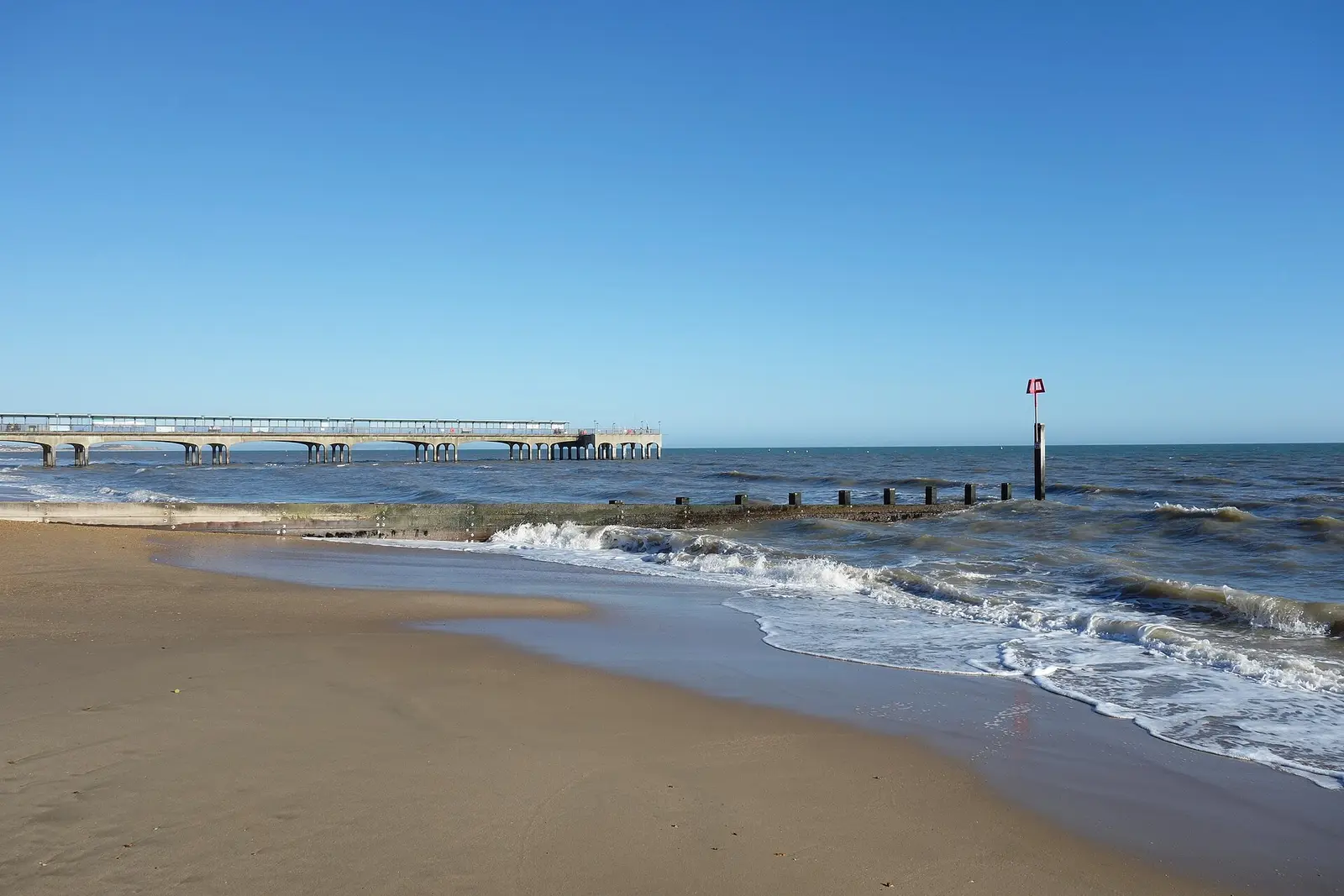
The promenade is the best thing this town gives a long-stay resident. It runs flat and almost unbroken for around ten miles, from Sandbanks in the west to Hengistbury Head in the east, so a walk or a ride can be as long as you feel like without any planning. Bikes are welcome at up to 10mph, though not on the promenade between 10am and 6pm in July and August, and never on the zig-zags down the cliff.
Saturday mornings there is a free timed 5k at Kings Park at nine. Register once online, bring the barcode, run or walk it. Six weeks of the same few hundred people in the same drizzle does more for feeling settled than anything on the seafront.
What October does to the town
The season has a hard edge. RNLI lifeguards patrol Bournemouth East, Bournemouth West, Boscombe East and Sandbanks daily from 10am to 6pm, late March to the end of September; the smaller beaches finish earlier, and daily beach hut hire stops at about the same point. Then the deckchairs go, the kiosks shutter one by one, and the seafront becomes a very long walk with the sea on one side.
What catches people out is that the town itself does not empty. Students arrive as the holidaymakers leave, Bournemouth University’s halls fill in the third week of September, so the buses get busier while the beach gets emptier. October brings the marathon festival to the seafront and Arts by the Sea into the gardens; November brings the Christmas market and the illuminated tree trail. The quiet stretch is mid-January to the end of February, when December’s average of under two hours of daily sunshine has stopped being a novelty and you learn which cafés stay open. Bournemouth out of season goes into it properly.
Making a temporary flat feel lived-in
Small things do disproportionate work. A decent knife and a chopping board, if the kitchen came with neither, save you from the slow attrition of blunt cutlery. One café visited often enough that somebody recognises you changes the texture of a month. One walk you can do in the dark is worth more in February than any day trip.
Where you sleep matters more on a long stay than a short one, because everything happens on foot. Southbourne gives you a high street, a cliff top and very little noise. Boscombe is cheaper, scruffier and better for coffee. The town centre puts all of it in range and charges you the weekend nights in return. The neighbourhood guide works through the trade-offs before you commit to a second month.