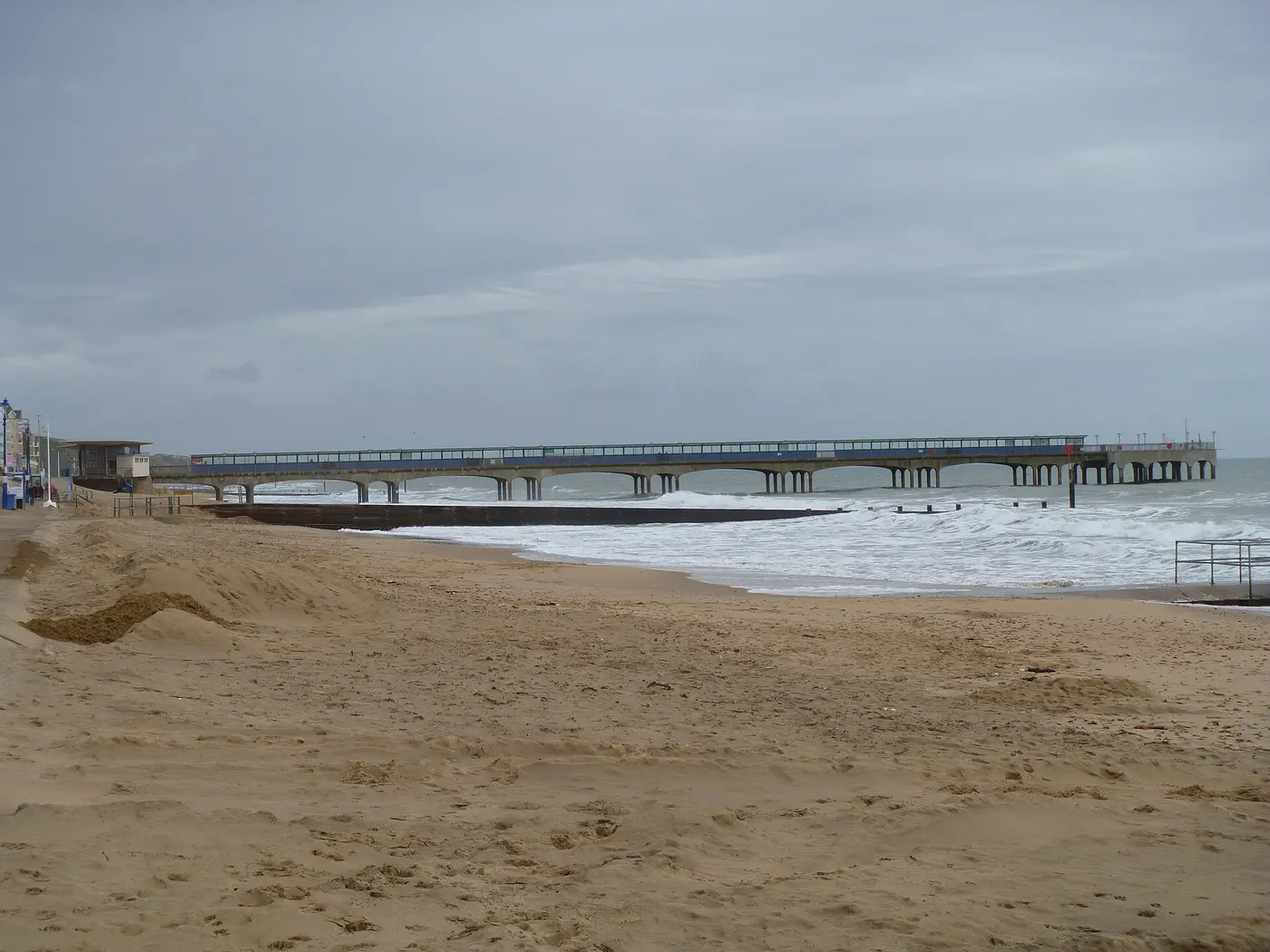
Standing where Sea Road meets the seafront, two tall granite slabs mark the entrance to Boscombe Pier. Titled From Dawn Until Dusk, the piece was created by sculptor Simon Hitchens and installed in 2008 as part of a broader regeneration of this stretch of Boscombe. It’s easy to walk past without noticing at first, but up close the scale and detail of the stone reward a second look, and it’s become a quiet fixture of the approach to the pier for anyone heading down to the beach.
What it is
The sculpture is formed from two granite slabs, each measuring around five metres tall, that were originally cut and split from a single block of stone weighing more than thirty tonnes. At the top of each slab sits a disc, one black and one grey, positioned to face east and west. The discs are read as representations of the sun and moon, and their orientation is meant to draw attention to the daily rhythm of light along the seafront, which gives the work its title. The same disc motif reappears on Pump Island, a structure on the opposite side of the site, tying the two features together visually.
Visiting
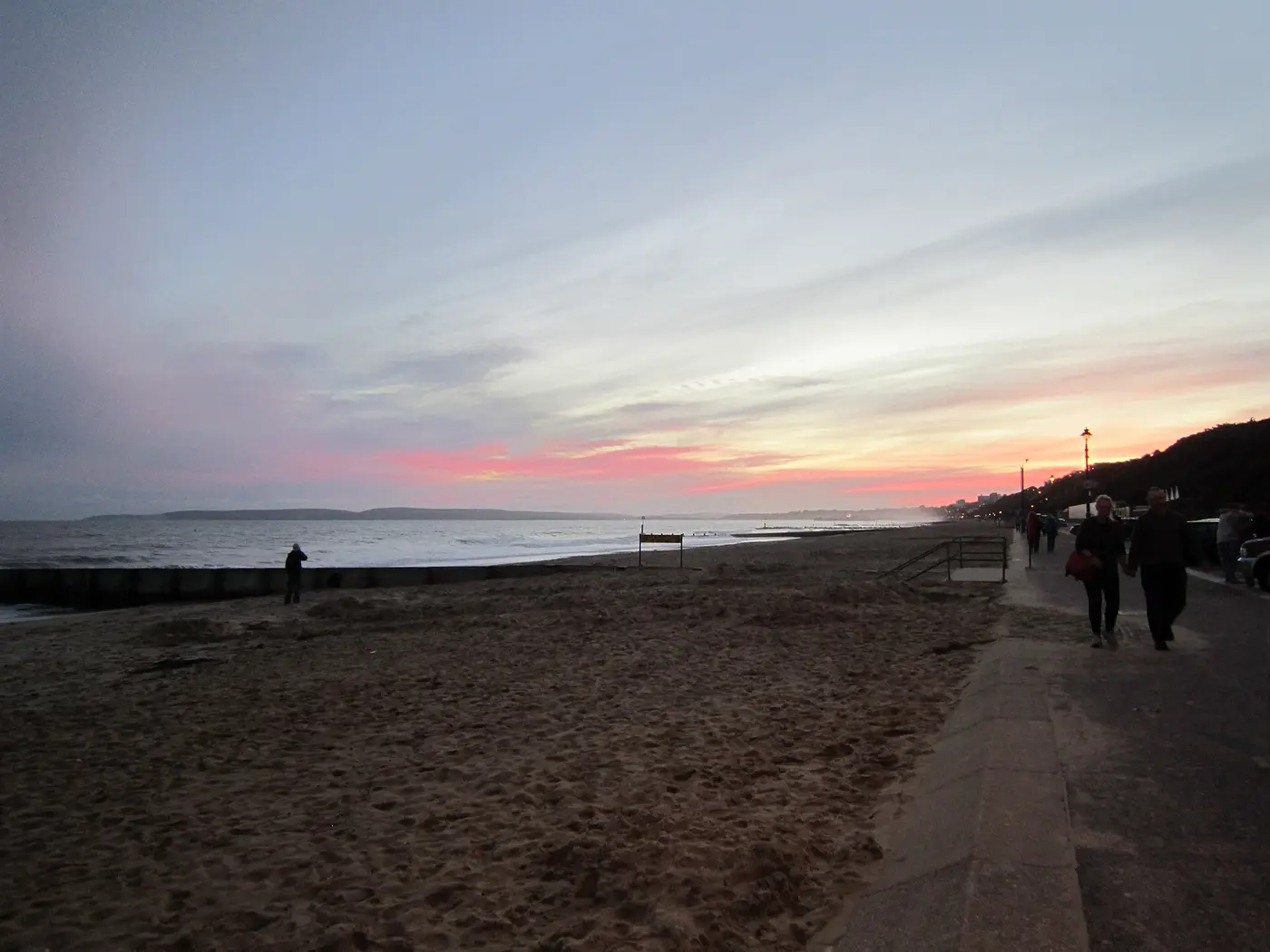
There’s no admission charge and no set opening hours, since the piece stands in open public space at the pier entrance rather than inside a building. It can be seen at any time of day, though it’s naturally at its most striking in the low light of early morning or evening, when the shift between the sun and moon discs feels most relevant to the setting. Most visitors take it in on the way to or from Boscombe Pier or Boscombe Beach, rather than making it a destination in its own right, so it works well as a short stop rather than a long visit.
Where it is
The sculpture sits on Sea Road, right at the point where the promenade meets the pier, in the heart of the Boscombe seafront. It was installed as part of the Sea Road regeneration scheme commissioned by the former Bournemouth Borough Council, alongside changes to the terraced landscaping around the pier entrance. The verticality of the two slabs was designed to sit in deliberate contrast with the low, horizontal roofline of the listed pier entrance building nearby, so the two structures are worth viewing together rather than in isolation.
Good to know
Because it’s an outdoor granite structure in an exposed coastal spot, the surface weathers naturally over time and can look different depending on the light and tide. There’s no ticket booth, signage beyond a small plaque, or facilities attached to the artwork itself, but the wider Boscombe seafront around it has cafes, toilets, and pier facilities within a short walk. It’s a worthwhile few minutes for anyone interested in public art or the design history of the seafront, and a natural point to pause while exploring Boscombe on foot.