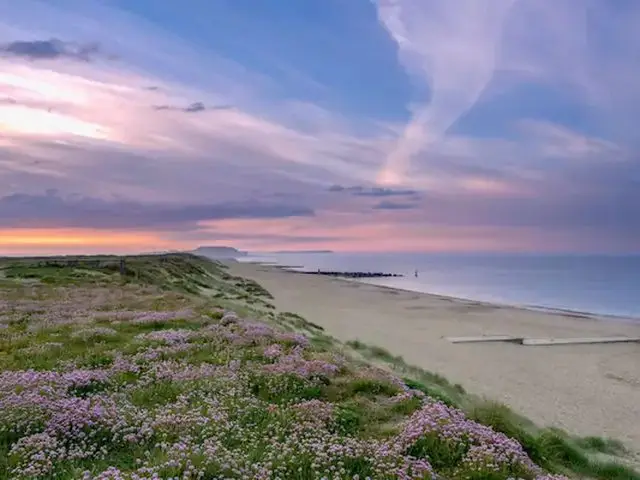
Just off the coast between Bournemouth and Poole, hidden beneath the waves of Poole Bay, lies a patch of seabed unlike almost anything else nearby. Poole Rocks Marine Conservation Zone protects a small but significant rocky reef rising out of the sand and mud that otherwise dominates the bay, and it has been legally safeguarded since 2013. There’s nothing to see from the shore and no gate to walk through. This is a site you learn about rather than stroll around, but it’s one of the more unusual entries in the local coastline’s story.
What it is
Poole Rocks is a Marine Conservation Zone (MCZ), an UK designation created to protect nationally important seabed habitats and the species that depend on them. It was one of the first batch of MCZs designated in England in 2013, with its boundaries and protected features later refined by an amendment order in 2019. Unlike the open sand and sediment that stretches across most of Poole Bay, this small area of low, rocky outcrops gives marine life somewhere firm to attach and shelter.
The habitat and wildlife
Because the water here is more turbid than the clearer stretches further west, the rock isn’t cloaked in seaweed the way you might expect. Instead it supports what’s often described as “animal turf”: a dense covering of sponges, bryozoans and hydroids that filter feed from the water column. The site is also known for honeycomb worm and ross worm reefs, both formed by tiny tube-building worms that cement together to create their own reef structures over time. Records from surveys of the area include native oysters, pink seafans, the seldom-recorded Couch’s goby, and fish such as pouting, pollack and several types of wrasse, including Ballan wrasse.
Visiting
There’s no visitor centre, no marked trail and no set opening hours, since the protected area is entirely underwater and some distance offshore. For most people, the best way to experience Poole Rocks is through the dedicated project website, which documents the site’s marine life through photography and survey footage, or through factsheets published by Natural England. Divers and boat users with a genuine interest in the reef should check current conditions, depth and any local restrictions before planning a trip, since the MCZ status is there to limit damaging activity such as trawling and dredging rather than to provide public facilities.
Good to know
Treat this listing as background on a protected feature of the local coastline rather than a conventional day out. If you’re exploring Poole Bay by boat, kayak or dive charter, it’s worth knowing this patch of reef is there and why it’s protected, and if you’d rather stay on dry land, nearby Hengistbury Head offers a shore-based way to get a sense of this stretch of coast’s wilder side.